As twilight deepens and the night air in Ikoma carries the scent of smoke and pine, a thousand voices gather beneath the vermilion torii of Ikoma Taisha, awaiting a spectacle as ancient as the mountain itself. The himatsuri, or Fire Festival, ignites once again, its flames a bridge between gods and humans.

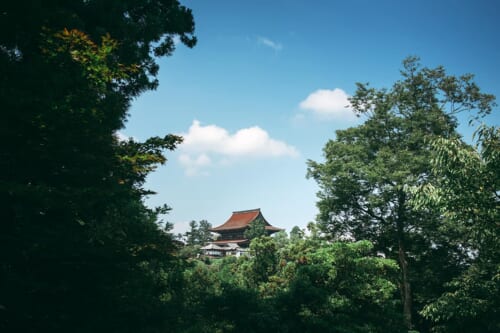
 Ikoma Shrine
ESTABLISHMENT PLACE_OF_WORSHIP POINT_OF_INTEREST- 1527-1 Ichibuchō, Ikoma, Nara 630-0222, Japan
- ★★★★☆
At the heart of this ritual stands fire, as a symbol of purification, rooted in Shinto cosmology since the Heian period, when the imperial court’s sacred rites included fire offerings to cleanse the world of impurity. Here at Ikoma Taisha, the fire god is worshiped alongside the divine siblings Ikomatsuhiko and Ikomatsuhime, deities who guard both mountain and flame. For centuries, the people of Ikoma have gathered to give thanks for harvests and to honor the fire that sustains life.
The Mountain and Its Gods
Mount Ikoma rises on the border of Nara and Osaka, its wooded slopes veiled in mist and legend. Long before the shrine was built, the mountain itself was an object of worship. To this day, locals still refer to Ikoma as a living god, the mountain that brings water in spring and gathers spirits in autumn. As priest Tomoshige Tanino explains, “People in the past felt that water comes down from the mountains, and that all life-force flows from them. Without Mount Ikoma, there would be no Ikoma.”


The fire rituals of the himatsuri echo this ancient belief. They welcome the mountain deity’s descent to the village, transforming the act of lighting a flame into a sacred communion. Each year, the same fire (lit through a traditional friction method one week before the festival) is carefully kept alive until the night of the ceremony. That continuity, I am told, is the shrine’s most sacred responsibility: never letting the divine fire die.
- Mount Ikoma
ESTABLISHMENT NATURAL_FEATURE - Mount Ikoma, Nabatacho, Ikoma, Nara 630-0231, Japan
- ★★★★☆
The Eve of the Festival
The festival begins with Yoimiya, the eve of the sacred fire. By late afternoon, shrine maidens perform dances to the soft rhythm of flutes. The atmosphere feels suspended between ceremony and celebration. Children, dressed in miniature happi coats, parade through the grounds carrying small mikoshi (portable shrines carrying the deities), their faces lit by the flicker of torches.


As darkness falls, the yomiyabi begins, where two giant torches are raised before the altar, and the priest recites prayers while votive prayer sticks burn in the blaze. The crowd hushes as flames rise toward the night sky. The scent of straw, cedar, and burning pine fills the air, a sacred alchemy of earth and spirit. Around me, people clasp their hands and whisper wishes into the fire.
Then comes the miyadaiko, a thunderous drum performance that echoes through the valley. Each beat feels like the heartbeat of the mountain itself. Watching it, I sense what Tanino meant when he described the festival as “a joyous occasion, like the gods giving fire to humans.”
The Day of Fire
The next day, the atmosphere shifts from reverence to intensity. The mikoshi descend from the main hall in a grand procession. Accompanied by priests, musicians, and villagers divided into north and south groups, they make their way toward the otabisho, the temporary resting place of the gods. A series of ritual competitions unfolds here, such as offerings, torch races, and the climactic fire-taking ceremony. The participants, young men clad only in white robes and headbands, carry enormous flaming torches, each over two meters long, made from carefully cultivated wheat straw. The fire they bear is the same sacred flame that has burned since the festival’s beginning.

At the priest’s signal, two fire-bearers hoist their torches and dash down seven stone steps, sparks scattering into the air. The crowd erupts in cheers as they transfer the divine flame to four smaller altars. The entire scene lasts only seconds, yet it contains centuries of devotion, a living transmission of an unbroken tradition.
This ritual, Tanino tells me, traces its origins to the Heian court’s Daijosai, when the shrine offered firewood for the emperor’s sacred enthronement ceremony. Later, under the influence of Shugendo, the syncretic mountain faith, it evolved into an act of both endurance and prayer. “The fire festival is not just about Shinto, it’s about culture, about how communities once united around the life-giving power of fire,” Tanino reflects.
A Priest’s Calling
When I ask Tanino how he became a Shinto priest, he smiles. “I was ten years old. I saw the fire festival and realized I couldn’t imagine life without it, so I thought I had to protect this shrine.” His family has served Ikoma Taisha for generations, passing down rituals and the unspoken duty to keep the festival alive since the Edo period (1603-1868).

Unlike the strict ascetic training of Buddhist monks, Tanino’s education took place at a Shinto university, where he studied mythology, history, and ritual practice. Yet his real learning came from serving people. “Shrines are not only about the gods, they’re about people. When someone comes in distress, I listen. Sometimes they feel better just by praying here. That’s when I feel grateful for this work.”

For him, the himatsuri embodies the essence of Shinto, a dialogue between humans and the divine, through acts of gratitude and renewal. “Fire is both sacred and communal, it connects us to the gods, but it also gathers us together as people. That’s why the festival still matters.”
Reflections in the Flame
As the night deepens, I watch the final embers fade on the shrine’s stone steps. Around me, families pack away lanterns, children chase the last fireflies of the season, and the priests extinguish the sacred torches, only to relight them again next year.
I think of how this ritual, passed down for nearly a millennium, still binds the people of Ikoma to their mountain, their gods, and one another. I was fortunate enough to witness and participate in the organization of this edition of the himatsuri, and I realize how much work goes into preparing such an event. As I leave the shrine, the air still warm with smoke and prayers, I understand that the fire of the gods silently lingers in every heart that gathers to witness it.





No Comments yet!