If you’re planning a trip to Japan, one thing is guaranteed — you’re going to need somewhere to stay. Fortunately, Japan offers a wide range of accommodation, from sleek city skyscraper hotels to cozy countryside ryokan (traditional inns). If you require accessibility features, however, finding the right place can feel like solving a puzzle with missing pieces.
As someone who’s traveled across Japan in a wheelchair (and still does regularly!) I’ve learned a lot, and sometimes the hard way. So, here are a few things to keep in mind when looking for an accessible hotel in Japan.
Understanding the Law (and the Loopholes)
For many years, Japanese law required hotels with more than 50 rooms to have just a single accessible room, no matter how large the property — a 500-room hotel was legally allowed to offer only one accessible room.
In preparation for the Tokyo 2020 Olympics and Paralympics, accessibility laws were updated, but only for new hotels or existing hotels undergoing significant renovations. Under these changes, newly built or substantially remodeled hotels with more than 50 rooms must now make at least 1% of their rooms accessible. However, the new law does not apply retroactively: older hotels that haven’t been renovated are not required to update their facilities, so it’s common for established hotels to offer only the bare minimum as required by the previous law.

Adding to the complexity, Japan does not have a detailed or uniform national definition of what qualifies as an “accessible” hotel room. What’s advertised as accessible in one hotel might mean only a handrail in the bathroom, while another hotel may offer fully wheelchair-adapted rooms with wider doorways and roll-in showers.
As a result, the number and quality of genuinely accessible hotel rooms in Japan is limited – especially in budget accommodation or smaller cities. Because standards and amenities vary greatly, travelers with specific accessibility needs often face extra challenges.
Start Planning Early
If I could give just one tip, this would be it: start your planning early. Accessible rooms are limited, and with international travel to Japan booming again, those rooms book up fast — sometimes months in advance.
Also, you’ll want to adjust your search terms. In Japan, you likely won’t find rooms labeled “accessible.” Instead, look for:
- Barrier-free バリアフリー
- Universal room ユニバーサルルーム
- Heartful room (a common label in the Toyoko Inn chain)
Pro tip: Sometimes these rooms only appear on the Japanese version of the hotel’s website. Use browser translation tools to explore those pages.
To make things easier from the get-go, check out the growing list of accessible hotels on Accessible Japan. It’s a great starting point.
Booking Accessible Rooms
Reserving a barrier-free room can be a bit of a headache. Some hotel websites allow you to book these rooms directly, but many don’t. In fact, many hotels intentionally block them from general booking to prevent them from being reserved by guests who don’t need them. While it is an idea rooted in consideration, it does add to the work required when thinking about actual reservations!
What to do?
- Option 1: Book a similar room online, then email or message the hotel with your booking number to request they switch it to the accessible room. Make sure you get a written confirmation — don’t assume the request will be automatically granted. A bit risky, but at least you can get the points from the booking site!
- Option 2: Call or email the hotel directly. This can be stressful due to language barriers, and since you won’t have a confirmation number until they reply, there’s a bit of uncertainty.
- Option 3: Use a travel agent. They can handle communication for you and ensure that your needs are clearly conveyed (and confirmed in writing).

Whichever path you choose, follow up. You want to arrive in Japan knowing your room is ready for you, not just a vague promise.
Confirm the Details (Never Assume)
Even if a room looks good online or is labeled as barrier-free, confirm the actual features. While some travelers with disabilities are comfortable using standard rooms in their own countries, it’s important to be a bit more cautious when booking in Japan. Small cultural design features, like a step at the entrance or into the bathroom, may not be visible in photos or floor plans, and be an unpleasant surprise after checking in!
It’s also worth confirming any key amenities before you arrive. For example, I’ve stayed in accessible rooms where the shower chair provided was a basic plastic stool without back support. For many travelers, that might not be sufficient. If you need specific equipment, such as a sturdy shower chair with backrest, it’s a good idea to ask the hotel directly and request photos when possible. Most hotels are happy to provide the information once you reach out.

Here are a few key questions to ask the hotel before booking:
- Is there step-free access to the room and inside it?
- Can they provide a proper shower chair with back support?
- Are the doorways and space by the bed wide enough for your wheelchair model?
If possible, ask for photos. Most hotels will happily send them if you ask.
About Those Showers
Unfortunately roll-in showers and full wet rooms are still rare in Japan, even in major hotels. Many older hotels use a “unit-bath” — a prefabricated bath module that includes a bathtub, sink, and toilet all in one space. The bad news is the shower is in the bathtub. The good news is that many of these have floor drains, making it possible to shower beside the tub in a shower-chair if needed. Just test the water flow before you commit!
While it’s not a wet room by design, it often works out in practice. Just be careful with water drainage and avoid soaking nearby outlets or towel bins.
Traditional Inns and Onsen
If you’re dreaming of staying in a ryokan or soaking in an onsen (hot spring), I don’t blame you — it’s an incredible cultural experience.
Unfortunately, these are the types of accommodation that can be the most challenging. These inns are often small (under 50 rooms), and therefore exempt from legal requirements to provide accessible accommodations. Add in tatami mats (which wheelchairs can damage), small steps at entrances, and narrow hallways, and it’s easy to see why it can be tough.
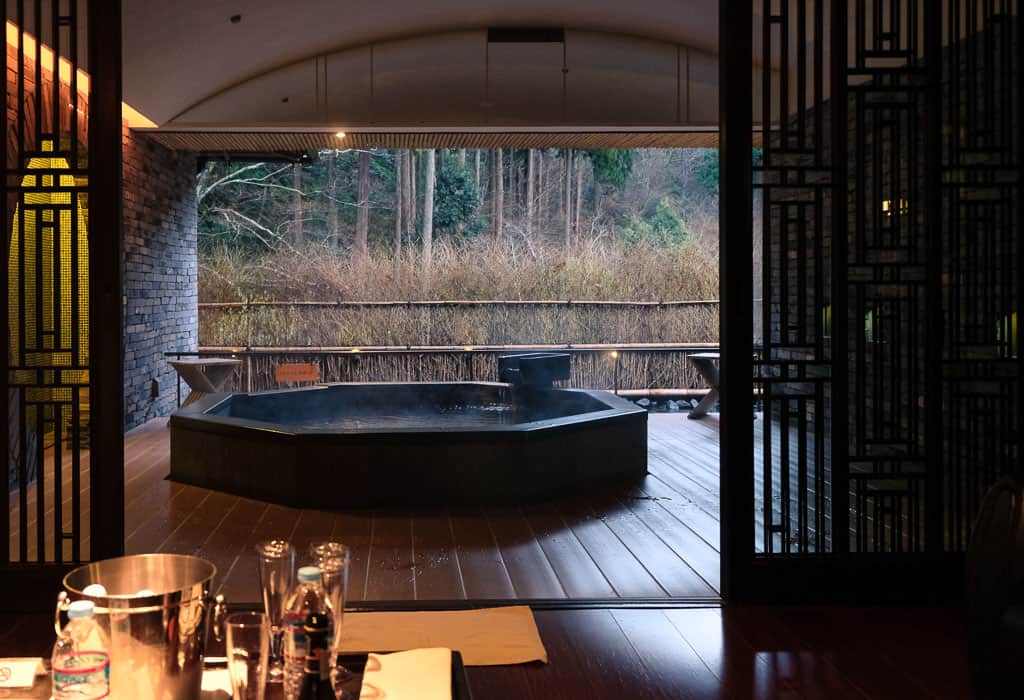
That said, some accessible options do exist. One standout is Naniwa Issui, a beautifully accessible ryokan in Matsue in Shimane Prefecture, with onsen facilities designed for wheelchair users. Others are popping up gradually, especially in more touristy areas.
For the best results, I recommend contacting local tourism offices or accessible travel committees in the region you’re visiting. They often have insider knowledge and can point you to places that may not be advertised online but can accommodate.
Enjoy the Journey
This post lists a lot of challenges — not to discourage you, but to empower you with information. Because with enough planning and a bit of persistence, you can absolutely find a hotel in Japan that suits your needs and gives you the amazing experience you’re hoping for.
Remember:
- Start early
- Use the right keywords
- Confirm every detail
- Ask for help when needed
And if you’re looking for support along the way, the Japan group on tabifolk is full of travelers with disabilities who share tips, answer questions, and cheer each other on. Finally, get ready for the spirit of omotenashi — Japan’s deep-rooted culture of hospitality. Hotel staff will often go the extra mile to make your stay comfortable, even if there are physical limitations in the building itself.
Cover photo: Namba Oriental Hotel






No Comments yet!