Welcome to the latest installment of Voyapon’s series, where we share some of the best under-the-radar events happening throughout Japan. Every month, we give our readers the best events from Hokkaido to Okinawa and everywhere else in between. Find our list, below, of some amazing activities happening in January 2026.
- Tokyo
- The Nutcracker at the New National Theatre Tokyo (Until January 4)
- Die Fledermaus at the New National Theatre Tokyo (January 22 to January 29)
- Andaz Tokyo Toranomon Hills Winter Promotions (Ongoing)
- Grand Hyatt Tokyo Winter Promotions (Ongoing)
- Roppongi Crossing: What Passes Is Time. We Are Eternal at Mori Art Museum (Until March 29)
- A Perspective: An Exhibition by Takeru Iwazaki at UltraSuperNew Kura (January 17 to January 30)
- Gifu
- Gunma
- Miyagi
- Kyoto
- Kanagawa
Tokyo
2026, in Tokyo, kicks off with a series of superb cultural highlights.
The Nutcracker at the New National Theatre Tokyo (Until January 4)
A winter staple at the New National Theatre Tokyo, The Nutcracker returns for the 2025/26 season in a vibrant new production by acclaimed British choreographer Will Tuckett. Created especially for the National Ballet of Japan, this version marks Tuckett’s second collaboration with the company following his award-winning The Tragedy of Macbeth (2023). Drawing on the classical foundations of Lev Ivanov while infusing theatrical flair, Tuckett conjures a richly imaginative world, brought to life through Colin Richmond’s colorful sets and costumes and Tchaikovsky’s beloved score, newly arranged by Martin Yates.

Performed by the dancers of the National Ballet of Japan with the Tokyo Philharmonic Orchestra, the production unfolds from Christmas Eve enchantment to the glittering Kingdom of Sweets, celebrating wonder, transformation and seasonal joy. Running until January 4, this Nutcracker is poised to become a cherished holiday tradition in Tokyo.
| When | Until January 4 |
| Where | New National Theatre Tokyo 1-1-1 Honmachi, Shibuya, Tokyo 151-0071 |
| Admission Fee | Starting from 6,050 yen |
| Official Website | https://www.nntt.jac.go.jp/english/ |
 New National Theatre, Tokyo
ESTABLISHMENT POINT_OF_INTEREST- 1-chōme-1-1 Honmachi, Shibuya, Tokyo 151-0071, Japan
- ★★★★☆
Die Fledermaus at the New National Theatre Tokyo (January 22 to January 29)
Ring in 2026 with sparkle and laughter as Die Fledermaus, Johann Strauss II’s irresistible operetta, returns to the New National Theatre Tokyo. Beloved by seasoned opera-goers and newcomers alike, this effervescent comedy unfolds to Strauss’s most famous waltzes and polkas, beginning with its instantly recognisable overture and continuing in a whirl of elegance, romance and mischief.
The New National Theatre Tokyo production is directed by celebrated Viennese tenor Heinz Zednik, whose staging captures the wit, charm and unmistakable fragrance of Vienna. Adding visual richness, the Jugendstil-inspired sets and costumes evoke the decorative splendour of Klimt-era Vienna, creating a stage world both playful and refined.

The production also forms part of the global celebrations marking the 200th anniversary of Strauss’s birth in 2025. For audiences unable to travel to Vienna, Die Fledermaus offers a joyful way to celebrate the Waltz King’s legacy from Tokyo, welcoming the New Year in true operetta style.
| When | January 22-29 |
| Where | New National Theatre Tokyo 1-1-1 Honmachi, Shibuya, Tokyo 151-0071 |
| Admission Fee | Starting from 7,700 yen |
| Official Website | https://www.nntt.jac.go.jp/english/ |
Andaz Tokyo Toranomon Hills Winter Promotions (Ongoing)
As winter settles over the capital, Andaz Tokyo Toranomon Hills invites guests to embrace the season through a thoughtfully curated lineup of food, drink, and wellness experiences. Running from late December through February, the hotel’s winter offerings are united by a romantic strawberry theme inspired by Valentine’s Day and White Day, alongside warming flavors designed for colder months. Highlights include a refined Strawberry Afternoon Tea at The Tavern, where classic pastries meet subtle savory accents, and seasonal highballs that blend chocolate, berries, and sparkling notes. The Rooftop Bar adds drama with hot spiced cocktails served high above the city skyline, while the Pastry Shop showcases elegant strawberry desserts and limited-edition bonbon boxes ideal for gifting. Comfort continues at BeBu with a hearty pork burger, and at AO Spa & Club, where a winter-only hot stone therapy offers deep relaxation. Together, these experiences reflect Andaz Tokyo Toranomon Hills’ signature blend of contemporary luxury, seasonality, and sensory storytelling.

| When | Ongoing |
| Where | Andaz Tokyo Toranomon Hills 1-23-4 Toranomon, Minato, Tokyo 105-0001 |
| Admission Fee | Strawberry Afternoon Tea starting from 7,800 yen |
| Official Website | andaztokyodining.com |
- Andaz Tokyo Toranomon Hills
ESTABLISHMENT LODGING POINT_OF_INTEREST - Toranomon Hills Mori Tower 51st Floor, 1丁目-23-4 虎ノ門 港区 東京都 105-0001, Japan
- ★★★★☆
Grand Hyatt Tokyo Winter Promotions (Ongoing)
Grand Hyatt Tokyo ushers in 2026 with a refined celebration of seasonal indulgence, blending Japanese tradition with contemporary luxury. The hotel’s winter program spans wellness, dining, and design-led gastronomy, beginning with a New Year spa treatment at Nagomi Spa that combines fermented sake lees, yuzu and ginger oils, and a gold leaf face pack for a ritual rooted in renewal and good fortune.
Across its restaurants and bars, winter flavors take center stage. The Oak Door offers dramatic tableside carving of A5 wagyu and a playful reinterpretation of yoshoku with its scallop gratin burger, while Valentine’s cocktails shimmer with rose gin and strawberries. Japanese strawberries, especially prized Nyoho varieties, anchor elegant afternoon teas, French and Italian dinner courses, and meticulously crafted desserts.
Together, these experiences capture winter in Tokyo as Grand Hyatt Tokyo does best: polished, theatrical, and deeply attuned to the rhythms of the season.
| When | Ongoing |
| Where | Grand Hyatt Tokyo 6-10-3 Roppongi, Minato, Tokyo 106-0032 |
| Admission Fee | New Year Fortune Treatment: 48,700 yen |
| Official Website | https://www.tokyo.grand.hyatt.co.jp/en/restaurants/recommended/spa-seasonal-menu/ |
- Grand Hyatt Tokyo
ESTABLISHMENT LODGING POINT_OF_INTEREST - 6-chōme-10-3 Roppongi, Minato City, Tokyo 106-0032, Japan
- ★★★★☆
Roppongi Crossing: What Passes Is Time. We Are Eternal at Mori Art Museum (Until March 29)
First launched in 2004, Roppongi Crossing is a co-curated exhibition that not only celebrates contemporary Japanese art but further champions collaborative international artistic endeavor. Staged every three years, What Passes Is Time. We Are Eternal marks the eighth iteration of this snapshot of Japan’s vibrant art scene.
Mori Art Museum’s own curators have been joined by two internationally acclaimed Asian guest curators, Leonhard Bartolomeus and Kim Haeju, of Indonesia and South Korea, respectively. Collectively, they have brought together 21 domestic and foreign galleries and artists, hailing from cultural hubs including London, New York, Seoul, and a catalogue of Japanese locales. The lens may be focused on Japan, but it pans around to capture the globe.
The overarching theme of What Passes Is Time. We Are Eternal is one that emphasizes the fleeting nature of a moment and the preciousness of those that we can indeed capture. Such moments are expressed through a litany of media, from more conventional paint on canvas to architectural feats and room-occupying visual experiences. We are unable to freeze time, but this exhibition bottles our multiple perspectives on transience, expressing them through the works of an international collection of renowned artists.
Tickets for the exhibition can be purchased online or on the day at the 3F ticket counter.
| When | Until March 29 |
| Where | Mori Art Museum 53 Floor, 6-10-1 Roppongi Hills Mori Tower, Roppongi, Minato, Tokyo 106-6150 |
| Admission Fee | Starting from 1,800 yen (adults) |
| Official Website | https://www.mori.art.museum/en/exhibitions/roppongicrossing2025/index.html |
- Mori Art Museum
ESTABLISHMENT MUSEUM POINT_OF_INTEREST - Japan, 〒106-6150 Tokyo, Minato City, Roppongi, 6-chōme−10−1 Roppongi Hills Mori Tower, 53階
- ★★★★☆
A Perspective: An Exhibition by Takeru Iwazaki at UltraSuperNew Kura (January 17 to January 30)
This exhibition marks an attempt to reexamine a long-standing practice centered on drawing on square paper, reconsidering it from new angles and reconstructing its possibilities. The presented works explore drawing not only as a visual image but as matter, seeking to reveal its structure, its materiality, and its potential to evolve into new forms.
A Perspective features two bodies of work: the ORGM series and the EXTRACT series, each approaching drawing through different conceptual and structural frameworks.
| When | Opening reception: January 17, 5pm – 9pm Closed dates: Sunday and Monday |
| Where | UltraSuperNew KURA 2-6-18 Higashi, Shibuya, Tokyo 150-0011 |
| Admission Fee | Booking by appointment |
| Official Website | https://kura.ultrasupernew.com/pages/exhibition/takeru-iwazaki |
Gifu
A winter highlight that you shouldn’t miss awaits you in January in Gifu Prefecture.
Santera Mairi (January 15)
Santera Mairi is a magical winter festival held every January 15 in Hida Furukawa, Gifu Prefecture. Literally meaning “Three Temple Visit,” this tradition has continued for over 200 years, inviting visitors to make a pilgrimage to the town’s three Buddhist temples: Enko-ji, Shinshu-ji and Honkou-ji.
From late afternoon, hundreds of snow candles and lanterns light up the streets and along the Seto River, casting a warm glow across the snow-dusted town. Kimono-clad young people often take part, lighting white candles to pray for future relationships and red candles to celebrate past romantic success — a nod to the festival’s historical association with enmusubi (matchmaking).
Beyond its spiritual charm, Santera Mairi offers a festival market with local delights like Hida beef croquettes and gohei-mochi, and the chance to soak in the serene beauty of one of Japan’s most picturesque winter festivals.
| When | January 15 |
| Where | Hida, Gifu Prefecture |
| Admission Fee | Free |
| Official Website | https://hida.travel/destination/santera-mairi/38 |
Gunma
Also Gunma Prefecture, everything in January is about welcoming the new year.
Maebashi Hatsuichi Daruma Festival (January 9)
Held each year in mid-January, the Maebashi Hatsuichi Festival marks the first market of the year and one of Gunma Prefecture’s most enduring winter traditions. Dating back more than 400 years, the festival transforms central Maebashi into a lively streetscape of stalls, color, and ritual, despite the cold. Visitors come primarily to purchase daruma dolls (symbols of perseverance and good fortune), many crafted locally, reflecting the region’s long association with daruma production.
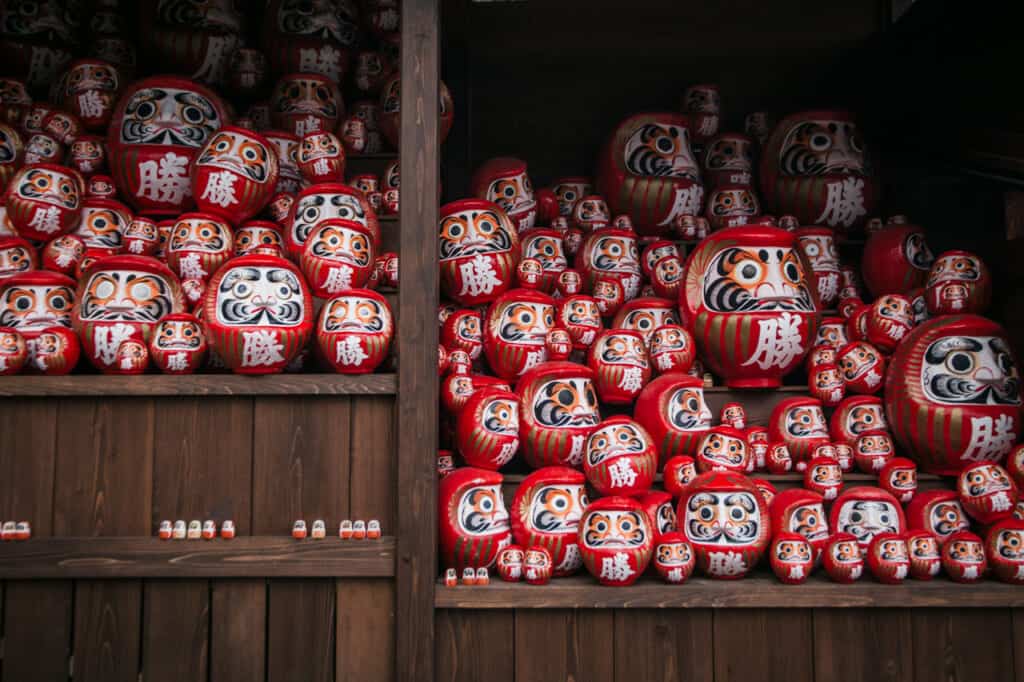
Alongside daruma, vendors sell lucky charms, kumade bamboo rakes, and seasonal street food, creating a festive atmosphere that blends commerce with spirituality. For local businesses and residents, Hatsuichi is both a practical and symbolic reset, a moment to pray for prosperity, health, and success in the year ahead. Crowds often peak in the evening, when lanterns glow and the chill sharpens the sense of occasion. Rooted in Edo-period customs yet very much alive today, Maebashi Hatsuichi offers a vivid glimpse into how regional Japan welcomes the New Year.
| When | January 9 |
| Where | Maebashi Hachimangu Shrine 2-9-21 Honmachi, Maebashi, Gunma Prefecture 371-0023 |
| Admission Fee | Free |
| Official Website | https://suishinka.maebashi-cc.or.jp/1823.html |
- Maebashihachimangu
ESTABLISHMENT PLACE_OF_WORSHIP POINT_OF_INTEREST - 2-chōme-9-21 Honmachi, Maebashi, Gunma 371-0023, Japan
- ★★★★☆
Miyagi
The Year of the Horse is also being celebrated with religious highlights in Sendai.
Dontosai Festival (January 14)
The Dontosai Festival, known locally in Miyagi as Matsutaki-matsuri, takes place on January 14, with its main celebration at Osaki Hachimangu Shrine in Sendai. This centuries-old New Year’s ritual centers on a large sacred bonfire where people bring and burn their past year’s New Year decorations, old shimenawa ropes, and amulets, symbolically offering them back to the gods and praying for health, safety, and good fortune in the coming year. One of the festival’s most striking sights is the hadaka-mairi (naked pilgrimage): participants clad in minimal winter attire (white loincloths and headbands) march through the cold toward the fire, ringing bells and carrying lanterns in a tradition said to purify body and spirit. Beyond the fire and procession, visitors can enjoy shrine prayers, food stalls, and the lively winter atmosphere, making Dontosai a powerful combination of spiritual renewal and community celebration.
| When | January 14 |
| Where | Osaki Hachimangu Shrine 4-6-1 Hachiman, Aoba, Sendai, Miyagi Prefecture 980-0871 |
| Admission Fee | Free |
| Official Website | https://discoversendai.travel/places/dontosai-festival/ |
- National Treasure Osaki Hachiman Shrine
ESTABLISHMENT PLACE_OF_WORSHIP POINT_OF_INTEREST - 4-chōme-6-1 Hachiman, Aoba Ward, Sendai, Miyagi 980-0871, Japan
- ★★★★☆
Kyoto
A winter wonderland awaits visitors in Kyoto Prefecture.
Miyama Thatched Village Winter Lantern Festival (January 19 to January 23)
Miyama’s Thatched Village, located about 80 minutes by car from central Kyoto, was once known for its long, quiet winters shaped by heavy snowfall and few visitors. To warmly welcome guests during the cold season, local residents began lighting snow lanterns, giving rise to what became the Snow Lantern Festival. In recent years, however, snowfall has declined, and from 2026 the event will be known as the Winter Lantern Festival. Today, LED lanterns and softly glowing street lights illuminate the traditional thatched houses, bathing the village in a gentle, dreamlike glow. The result is a serene nighttime landscape that highlights both Miyama’s rural beauty and the community’s hospitality. Visitors are invited to experience the calm atmosphere and warm spirit of Miyama in winter.
| When | January 19-23 |
| Where | Miyamacho Kita, Nantan, Kyoto 601-0712 |
| Admission Fee | Free |
| Official Website | https://yukitouro.jp/en/ |
Kanagawa
Just a stone’s throw from Tokyo, the jewel of Shonan shines brightly on the night skyline of Enoshima.
Enoshima Winter illumination (Until February 28)
The Enoshima Winter Illumination 2026, also known as “Jewel of Shonan” (Shonan no Hoseki), lights up Enoshima Island and surrounding areas from late November 2025 through February 28, 2026. It’s widely celebrated as one of the top winter illuminations in the Kanto region. Each evening from around 5pm-8pm (longer on weekends and holidays), Samuel Cocking Garden, the Enoshima Sea Candle lighthouse, pathways, and other scenic spots glow with dazzling light displays. Visitors stroll through glowing tunnels, LED-adorned trees, and artistic installations that create a jewel-like atmosphere against the night sky. The event blends seaside views with sparkling color and is perfect for romantic evenings, family outings, and photography in coastal winter scenery.
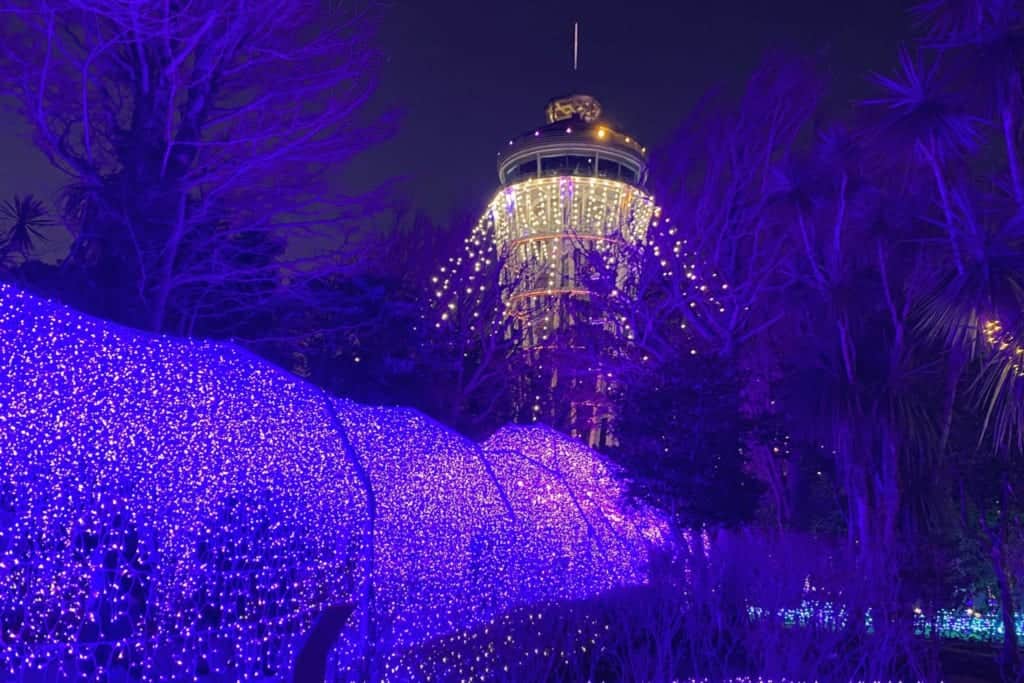
| When | Until February 29 |
| Where | 2-3-28 Enoshima, Fujisawa, Kanagawa Prefecture 251-0036 |
| Admission Fee | 500 yen |
| Official Website | https://en.enoshima-seacandle.com/ |
- Enoshima Samuel Cocking Garden
ESTABLISHMENT POINT_OF_INTEREST TOURIST_ATTRACTION - 2-chōme-3-28 Enoshima, Fujisawa, Kanagawa 251-0036, Japan
- ★★★★☆







No Comments yet!