Kunitachi doesn’t announce itself the way most Tokyo neighborhoods do. Instead, it is defined by order and openness: broad tree-lined avenues, low-rise buildings, and unobstructed sightlines that give a sense of space rarely associated with Japan’s capital. In many ways, Kunitachi represents a different idea of what a Tokyo neighborhood can be — one shaped not by urban sprawl, but deliberate planning.
Developed in the early 20th century as a purpose-built city, Kunitachi was originally home to the Tokyo University of Commerce, known today as Hitotsubashi University. Even the city’s name reflects this planning logic, combining kuni from Kokubunji Station to the north and tachi from Tachikawa Station to the south, marking its position between the two.
Today, Kunitachi offers a quieter side of Tokyo. Here you’ll find cafés, independent bookstores, pre-war architecture, one of the oldest shrines in the Kanto region, and even a local museum dedicated to Japan’s iconic bullet train.
Kunitachi’s Signature Street
Forming the backbone of Kunitachi’s layout, both geographically and historically, Daigaku-dori (University Avenue) was designed to connect Hitotsubashi University directly with Kunitachi Station. Its axial layout reflected contemporary ideas about urban planning that emphasized order, visibility, and symbolism, with the university positioned as the heart of the new city. Approximately 1.3 kilometers long, walking Daigaku-dori end to end takes about 15-20 minutes.
At the northern end of the avenue, sits the Former Kunitachi Station Building—an early Showa period structure that once served as the city’s main station. Relocated slightly from its original position in 2009, the building is a city-designated tangible cultural property and serves as a public facility with a small exhibition room detailing Kunitachi’s history.

The Former Kunitachi Station Building is open daily from 7am to 10pm and does not charge an admission fee. However, the information center and exhibition room have slightly different hours, being open from 10am to 7pm.
 Daigaku Dori
ROUTE- Daigaku Dori, Kunitachi, Tokyo, Japan
- ☆☆☆☆☆
Sweet Innovation
Just a short walk from Kunitachi Station, Truffle Donut is a specialty donut shop known for freshly made, light and fluffy donuts. Its signature item is the truffle donut, which is finished with a drizzle of truffle oil and salt, creating a balanced sweet-salty profile.
Another highlight is the donut a la mode, inspired by the classic Showa pudding a la mode—a retro dessert that pairs firm caramel custard (purin) with ice cream, whipped cream, and fruit. Here, those nostalgic flavors are reimagined and packed into a donut.
Truffle Donut is open daily from 10am to 6pm.
- TRUFFLE DONUT東京国立店
BAKERY ESTABLISHMENT FOOD - Japan, 〒186-0004 Tokyo, Kunitachi, Naka, 1-chōme−7−91
- ★★★★☆
Step Inside Japan’s Bullet Train
Although technically outside Kunitachi, the nearby Shinkansen Museum in Kokubunji highlights the ongoing research and experimentation behind Japan’s high-speed rail network. Directly affiliated with the Railway Technical Research Institute (RTRI), the building is less of a museum and more of a technical exhibition space with an experimental Class 951 Shinkansen you can actually go inside. This particular model was built in the 1960s to test technologies for future high-speed trains after the 1964 launch the Tokaido Shinkansen. RTRI remains central to this work, advancing Shinkansen technology in areas such as aerodynamics, noise reduction, earthquake resilience, and other safety systems.
The Shinkansen Museum is open daily from 9am to 5pm with free admission, but is closed on the second and fourth Monday of every month. So, it’s best to check before visiting.
- Shinkansen (Bullet Train) Museum
ESTABLISHMENT MUSEUM POINT_OF_INTEREST - 1-chōme-46-8 Hikarichō, Kokubunji, Tokyo 185-0034, Japan
- ★★★★☆
A Shrine Dedicated to Scholarship
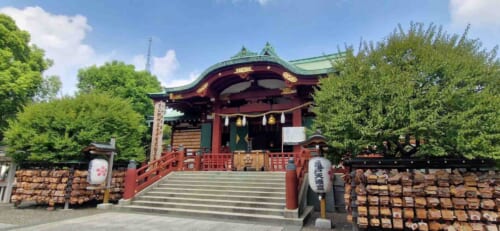
Located in southern Kunitachi, Yabo Tenmangu Shrine is believed to have been founded in 903, making it the oldest Tenjin shrine in the Kanto region. Tenjin shrines are dedicated to Sugawara no Michizane, a Heian-period scholar and statesman who was later deified as the kami—a deity or sacred spirit—of learning, literature, and scholarship.
If you’re lucky, you may also spot roosters freely roaming the shrine grounds. Roosters are traditionally associated with Tenjin shrines as they represent vigilance, discipline, and the marking of time—qualities closely aligned with scholarship and study. In Shinto belief, animals associated with light and morning are also seen as protectors.
- Yabo Tenmangu Shrine
ESTABLISHMENT PLACE_OF_WORSHIP POINT_OF_INTEREST - 5209 Yaho, Kunitachi, Tokyo 186-0011, Japan
- ★★★★☆
A Glimpse into Kunitachi’s Past
Just a short walk from Yabo Tenmangu Shrine, the Kunitachi Local Museum offers insight into the city’s past, tracing its story from pre-modern settlements to its early 20th century development as a planned city. Long before this occurred, the area where Kunitachi sits today, laid along the historic Koshu Kaido, one of five major highways that once connected Edo (modern Tokyo) with Kofu in present-day Yamanashi Prefecture.
Through maps, photographs, and historic artifacts, the museum explains how resident-led preservation efforts helped shape Kunitachi’s distinctive character.
Visitors can also visit the Kunitachi City Old Folk House, a preserved folk house (kominka) that likely dates back to the late Edo period. The traditional wooden house—relocated from Aoyagi Village—shows how residents once lived in this part of western Tokyo, with tatami rooms, sliding doors, and a simple layout designed around domestic and agricultural life.
The Kunitachi Local Museum and Kunitachi City Old Folk House are open every day except the second and fourth Thursday each month from 9am to 5pm. So once again, it’s best to check before visiting. Admission to the permanent exhibition is free, but special exhibitions may require a separate fee.
The museum has a small gift shop, multi-purpose room, and storage lockers.
- Kunitachi Local Museum
ESTABLISHMENT MUSEUM POINT_OF_INTEREST - 6231 Yaho, Kunitachi, Tokyo 186-0011, Japan
- ★★★★☆
- Kunitachi Old Folk House
ESTABLISHMENT POINT_OF_INTEREST - Japan, 〒186-0012 Tokyo, Kunitachi, Izumi, 5-chōme−21−20
- ★★★★☆
A Relaxing Stop After a Day Exploring
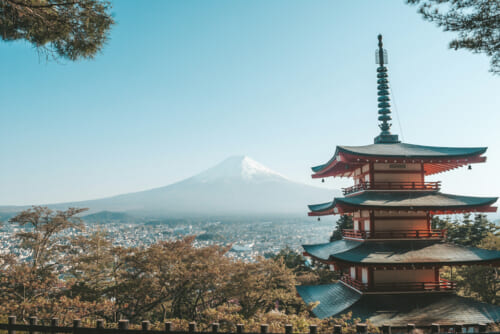
Lastly, on the banks of the Tama River along the city’s south-western border you’ll find Kunitachi Onsen Yura-no-Sato, a “super” public bathhouse that offers views of Japan’s iconic Mount Fuji.
In Japan, a “super” public bathhouse (known as super sento) is an expanded, leisure-focused version of a traditional public bath. While a regular sento usually serves as a simple neighborhood facility for quick, affordable bathing, super sento are designed for longer stays, offering a wider range of amenities. In addition to indoor and outdoor baths, they often include saunas, lounges, restaurants, and even wellness services. Popular since the 1990s, super sento occupy a sort of middle ground between everyday public baths and onsen resorts, making them an accessible way to unwind without leaving the city.
Kunitachi Onsen Yura-no-Sato is open daily from 9am to 1am. Tickets cost 1,000 yen on weekdays and 1,200 yen on weekends. There are also fees for renting towels and clothing.
- Kunitachi Onsen Yura no Sato
ESTABLISHMENT POINT_OF_INTEREST SPA - Japan, 〒186-0012 Tokyo, Kunitachi, Izumi, 3-chōme−29−11
- ★★★★☆
Getting There
Kunitachi is approximately 30 minutes to one hour from central Tokyo by train, depending on your starting point.
From Shinjuku Station or Tokyo Station, take the Chuo Line (Rapid) directly to Kunitachi Station. This is the most straightforward route and a convenient starting point for exploring the city center and Daigaku-dori.
If you’d prefer to start in southern Kunitachi, from Shinjuku Station you can instead take the Keio Line (Limited Express) to Meidaimae Station, then transfer to the Nambu Line, which goes to Yaho Station. Alternatively, from Shibuya Station you can take the Inokashira Line to Meidaimae Station and continue via the same route to Yaho Station.






No Comments yet!