Tokyo to Osaka often comes with a default setting: sprint south on the Tokaido and call it a day. Our proposal takes you literally through a different line. The New Golden Route follows the Hokuriku Shinkansen and its connecting conventional lines through Gunma, Nagano, Niigata, Toyama, Gifu, Ishikawa, Fukui, Shiga, and Kyoto, turning transfers into tastings.
Think eel in Marunouchi, satoyama dinners in Minakami, fermented flavors in the area around Zenkoji Temple , Sea of Japan seafood in Itoigawa and Toyama, herbs in Hida Furukawa, hands-on hosomaki in Kanazawa, and the Saba Kaido’s mackerel legacy in Wakasa, then a seasonal farm-to-table meal shaped by Shiga’s climate at a traditional ryotei in Hikone, before the gentle sweetness of azuki beans from Kameoka, Kyoto brings the journey to a serene close.
Along the way, JR East and JR West’s sightseeing trains add an edible detour. Each stop can work for a long weekend or a week-long crawl, and every recommendation is built around a meal that justifies the ride, with the Hokuriku Arch Pass tying the whole route together.
- The Rail Backbone: Hokuriku Shinkansen
- The Food Stops: One Prefecture at a Time
- Tokyo: Unagi Kitao (Marunouchi)
- Gunma: Keisetsu no Yado Syobun (Minakami Onsen)
- Nagano: HAKKO MONZEN (Zenkoji area)
- Niigata: Tsurugiya (Itoigawa)
- JR East Add-on: Koshino Shu*Kura (Niigata sake sightseeing train)
- Toyama: Sangen (Uozu)
- Gifu: Busuitei OHAKO (Hida Furukawa)
- Ishikawa: COIL (Kanazawa)
- Fukui: Kumagawa-juku and the Saba Kaido Route
- Marushin
- Yao Kumagawa (dispersed lodging and food culture experiences)
- Shiga: Ryotei Ryokan Yasui (Hikone)
- Kyoto: Azuki-no-sato (Kameoka)
- A Culinary Golden Route that Still Runs on Rails
The Rail Backbone: Hokuriku Shinkansen
The easiest way to understand this route is as a spine with ribs. The spine is the Hokuriku Shinkansen running from the Tokyo area toward the Sea of Japan side, with major rail hubs that make stopovers painless. The ribs are the conventional JR lines that peel off to food towns and onsen valleys, places where lunch can become an overnight, and an overnight can turn into a small appetite-led loop.
For example, you can plan in segments like Tokyo to Gunma/Nagano, then on to Niigata and Toyama, across to Kanazawa in Ishikawa, down through Fukui and around Lake Biwa in Shiga, finishing in Kyoto. Reserve seats on popular dates, leave breathing room during transfers, and treat stations as part of the meal plan: lockers, short walks, and quick local snacks between trains.
Hokuriku Arch Pass Essentials
The Hokuriku Arch Pass is the tool that makes this food-focused corridor feel cohesive: one pass, seven consecutive days along the New Golden Route, and a wide JR network between JR East and JR West that links the Tokyo side with Hokuriku and Kansai. This means unlimited travel within the valid area, in addition to covering reserved seats on the Hokuriku Shinkansen (Tokyo–Tsuruga) plus reserved seats on key limited express services (including Haruka and Thunderbird), alongside rapid and local JR lines in the covered area.
On the practical side: the pass runs from midnight on your start day to midnight on the last day (JST). if validity expires while you’re still riding on the final day, you may continue your journey. Reserved-seat bookings can be handled at ticket offices or compatible machines.
A Culinary Route at a Comfortable Pace
For gourmet lovers out there, scheduling can be a little challenging. Build the itinerary around one anchor meal per stop, then let everything else stay light. A full unagi (eel) set at lunch, a ryokan (inn) dinner, or a kaiseki course already does the heavy lifting; the rest of the day can be snacks, markets, and one good coffee. Treat transfers as scheduling allies: arrive early enough to stash luggage in station lockers, walk to the restaurant without rushing, then board the next train with time to spare. For reservation-heavy places (private-room dining, ryokan dinners), lock in dates first and fit trains around them. Add a sightseeing train as a moving aperitif: a tasting car replaces the pre-dinner scramble for a bar.
The Food Stops: One Prefecture at a Time
Let’s set off to discover this trip’s culinary highlights.
Tokyo: Unagi Kitao (Marunouchi)
Unagi Kitao pitches “modern eel cuisine” as a technique-led update on classics, backed by a parent group with deep Japanese-restaurant roots. Its signature is a high-heat, fast grill that brings crisp skin and a fluffy interior, ideal for diners who like their unagi with a little textural drama.

The restaurant selects farmed eel from multiple producing regions (including Shizuoka, Kochi, Nagasaki, Kagoshima, and Taiwan), focusing on premium, longer-grown fish. The sauces are an important part of the experience: whole-soybean soy sauce and junmai hon-mirin, with no chemical seasonings or additives, so the flavor leans towards elegant rather than loud.

The menu includes standout items such as unaju, seiro-mushi, and shirayaki, with fuller course options that can include classics like kimo-yaki (grilled liver). Private-room plans are available, and its convenient location near Tokyo Station makes it ideal for fitting a serious lunch into a rail day.
Address: 6F Marunouchi Oazo, 1-6-4 Marunouchi, Chiyoda-ku, Tokyo 100-0005
 Unagi Kitao
ESTABLISHMENT FOOD POINT_OF_INTEREST- Japan, 〒100-0005 Tokyo, Chiyoda City, Marunouchi, 1-chōme−6−4 丸の内オアゾ 6階
- ★★★★☆
Gunma: Keisetsu no Yado Syobun (Minakami Onsen)
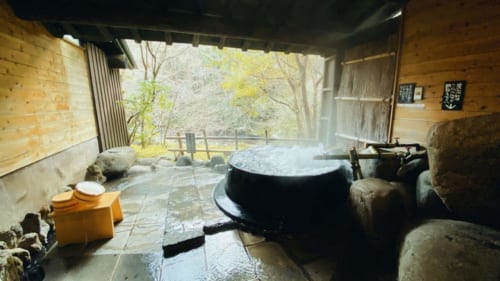
Kesetsu no Yado Syobun in Minakami Onsen is built for travelers who want their dinner and their landscape to come from the same postcode. The stay centers on open-air bath guest rooms plus two private baths, keeping the rhythm unhurried and personal.

Food is very much the headline here with “Yamabito cuisine” drawing on ingredients from the Okutone mountains, the Tone River, and nearby fields, with an approach that respects local tradition while keeping the cooking flexible and ingredient-forward.
Fish is deserving of charcoal and careful heat; vegetables keep their shape and color as much as possible; meat handling varies by cut, including aging where it suits. Dinner and breakfast are served in private dining rooms with irori-style tables, making long meals feel easy.
For guests’ convenience, the inn offers a 3pm pickup from Minakami Station with advance reservation.
Address: 277 Tsunago, Minakami-machi, Tone-gun, Gunma 379-1725
- Keisetsu no Yado Syoubun
ESTABLISHMENT FOOD LODGING - 277 Tsunago, Minakami, Tone District, Gunma 379-1725, Japan
- ★★★★☆
Nagano: HAKKO MONZEN (Zenkoji area)
HAKKO MONZEN sits right where Nagano’s classic sightseeing rhythm meets its everyday pantry: near Zenkoji Temple, in a renovated Taisho-era merchant house, serving casual and delicious plates built around Shinshu ingredients and treating fermentation as Nagano’s local superpower.
It’s an easy fit for a temple-area walk because it covers both lunch and dinner, with a casual and friendly atmosphere, allowing for flexible plans depending on the day’s schedule. The signature lunch is the Fermentation Gozen, which pairs two small sides, salad, sake-lees pork miso soup, Nagano-grown white rice, and a selectable main dish among several choices, including pork, chicken, or curry, among others, ensuring there is something for everyone.
For groups, the course plans include all-you-can-drink options featuring draft beer, shochu, sake, plus original HAKKO MONZEN drinks, alongside meal-only plans. And for those who enjoy local cuisine souvenirs, the restaurant also has a small shop selling some of its most popular products.
Address: 1F, 16-1 Higashigocho, Nagano City, Nagano 380-0832
- HAKKO MONZEN
ESTABLISHMENT FOOD MEAL_TAKEAWAY - Japan, 〒380-0832 Nagano, Higashigochō−16−1 1階
- ★★★★☆
Niigata: Tsurugiya (Itoigawa)
Tsurugiya in Itoigawa trades on two kinds of history: its own, and the coast to which it belongs. The restaurant traces its origins to 1805, beginning life as a rice merchant before growing into a long-running pure Japanese cuisine establishment.
Itoigawa sits at the entrance of Toyama Bay, and the kitchen encapsulates what that geography promises, with selected local seafood such as winter anglerfish, nodoguro (blackthroat seaperch), crab, sweet shrimp, and yellowtail, plus mountain vegetables that can run into early summer. Everything is selected into a refined and unforgettable culinary experience.
The hardest chapter for the restaurant came on December 22, 2016, when the Itoigawa Station North Great Fire burned the restaurant to the ground. Tsurugiya reopened on April 13, 2019, rebuilt on the original site whilst keeping the former building’s black-and-white image denoting continuity, with fresh timber and fresh resolve.
Address: 2-13-1 Omachi, Itoigawa, Niigata 941-0061
- Tsurugiya
ESTABLISHMENT FOOD POINT_OF_INTEREST - 2-chōme-13-1 Ōmachi, Itoigawa, Niigata 941-0061, Japan
- ★★★★☆
JR East Add-on: Koshino Shu*Kura (Niigata sake sightseeing train)
The Koshino Shu*Kura turns a rail leg into a tasting session with scenery on tap. As JR East rightfully frames it, Niigata is “the king of locally brewed sakes,” and this is the train built around that idea. Onboard, there’s a dedicated tasting corner serving five rotating Niigata brands, plus a free local-sake pour that sets a welcoming tone from the first sip for passengers who’ve booked their place onboard.

Seating is part of the fun: box seats for table talk, observation pair seats for the scenery purists, reclining seats, and a free space for stretching out between pours. The second car functions as the social hub, with the Kuramori service counter selling sake, snacks, and original goods, plus a commemorative stamp for the people who treat train rides like achievements.

For a souvenir with bragging rights, there’s an onboard-only original daiginjo created in collaboration with a Niigata brewery. Routes vary by service name, including runs such as Joetsu-Myoko–Tokamachi and Joetsu-Myoko–Niigata.

Toyama: Sangen (Uozu)
Sangen in Uozu is the kind of location that treats Toyama’s geography like a menu plan with Toyama Bay on one side, the Tateyama Mountain Range on the other, and seasonal cooking built around both.The restaurant is surrounded by Toyama Bay, often called a “natural fish tank,” and the Tateyama Mountain Range. Drawing on the bounty of both sea and mountains, it weaves this rich natural backdrop into its kaiseki-style course.

The format suits travelers who like dinner to feel unhurried: every room is private, and the house explicitly positions itself for special occasions, such as celebrations, and memorial meals, occasions that benefit from quiet pacing and clean focus.

The restaurant’s location is quite convenient along the route, just a short walk from Uozu Station on Ainokaze Toyama Railway, putting it within easy reach once you’ve reached Toyama by Hokuriku Shinkansen and continued onward. Closing days are irregular, so make sure to check the notices on the official website just in case.
Address: 2-15 Ekimae Shinmachi, Uozu-shi, Toyama 937-0051
- 三玄
ESTABLISHMENT FOOD POINT_OF_INTEREST - 2-15 Ekimae Shinmachi, Uozu, Toyama 937-0051, Japan
- ★★★★☆
Gifu: Busuitei OHAKO (Hida Furukawa)
Busuitei OHAKO feels like the kind of café that Hida itself might have dreamed up: rooted in the mountains, yet quietly inventive. It certainly works beautifully as a “walk, eat, keep walking” stop in Hida Furukawa: a café-style spot that treats local medicinal herbs as everyday food, served in a retro Taisho-era folk house that stands out on the street.
The concept is straightforward and very Hida: plenty of herbs, prepared in a way that stays genuinely tasty: The house specialty is an herb-based lunch plate that shifts with the season, and the drinks follow the same logic, with coffee made with peaberry beans and herb-infused options that match the menu’s aroma-first personality.

If you’re in a hurry (or just committed to canal-side snacking), there’s a takeout window, plus a seasonal fresh-cream soft serve that has a habit of becoming the second dessert.
Address: 3-22 Ichinocho, Furukawa-cho, Hida-shi, Gifu 509-4234
- Ohako
CAFE ESTABLISHMENT FOOD - 3-22 Furukawachō Ichinomachi, Hida, Gifu 509-4234, Japan
- ★★★★☆
Ishikawa: COIL (Kanazawa)
COIL is a Kanazawa restaurant with a very local flex: it takes the city’s familiar hosomaki sushi culture and turns the last step into an experience: diners select ingredients, “complete” the rolls with their own hands, then eat.

The idea is part art project, part culinary play, positioning it as a sensory-forward, modern creative Japanese concept built around traditional pillars: hosomaki sushi, tempura, and tea, presented with contemporary visuals. For the hosomaki, guests can go well beyond classic seafood: the filling lineup spans a broad mix of options, from meat and vegetables to cheese and other combinations, so the experience works smoothly for diners who avoid raw fish and can be tailored to halal or vegan preferences depending on the selections.

Around that, the kitchen adds crisp tempura, seasonal miso soups, and a carefully sourced variety of Japanese teas from a tea-tasting stand. Everything arrives in clean, modern ceramics that echo Ishikawa ’s craft heritage without falling into nostalgia.
Between its bright open layout and casual pricing, COIL works both as a lunch stop while exploring Kanazawa and as a light dinner before evening trains.
Address: 2F Kanazawa Hakomachi, 1-1 Fukuro-machi, Kanazawa-shi, Ishikawa 920-0909
- Kanazawa Temakizushi Coil
CAFE ESTABLISHMENT FOOD - かなざわはこまち 2F, 1-1 Fukuromachi, Kanazawa, Ishikawa 920-0909, Japan
- ★★★★☆
Fukui: Kumagawa-juku and the Saba Kaido Route
Kumagawa-juku sits on the Saba Kaido (Mackerel Road), the trade routes that once linked Wakasa Bay in southwestern Fukui with Kyoto’s markets (such as Nishiki Market). Long before chilled trucks and next-day delivery, fish had a deadline, and this valley town today preserves its traditional streetscape.
The settlement grew along the Kita River as a relay point where cargo could be carried by horse and even transported by boat, which explains why the town’s layout still retains its traditional streetscape.
Today, the appeal is how much of that Edo-period townscape still holds together. Kumagawa-juku was designated an Important Preservation District for Groups of Traditional Buildings in 1996, and the wider story of Miketsukuni Wakasa and the Saba Kaido was recognized as Japan Heritage in 2015. In 2024, it became the first site in Japan to be selected for the “Japan Heritage Premium,” the highest level of recognition awarded to certified Japan Heritage areas, as a model representing the direction that Japan Heritage aims to pursue.
Marushin
In a post town shaped by food logistics, Marushin makes an appropriately on-theme stop: a long-running shop inside a traditional over 190-year-old Kumagawa-juku building, known for both kudzu sweets and saba-zushi.
The headline order is its saba-zushi made with domestically sourced fresh mackerel, alongside a lineup of kudzu classics like kuzumochi, kuzukiri, and kuzumanju, plus comfort-side dishes like sesame tofu and seasonal pickles, served in tatami rooms that suit both solo snackers and reserved groups.
If you want your visit to feel like a real break in the journey, eat it in-house: the setting has a beautiful old-town atmosphere (think low tables and time moving at a sensible pace), which pairs well with a menu built around ingredients that once traveled this very road.
Address: 39-11-1 Kumagawa, Wakasa-cho, Mikatakaminaka-gun, Fukui 919-1532
- Marushin
ESTABLISHMENT FOOD POINT_OF_INTEREST - 39-11-1 Kumagawa, Wakasa, Mikatakaminaka District, Fukui 919-1532, Japan
- ★★★★☆
Yao Kumagawa (dispersed lodging and food culture experiences)
Yao Kumagawa takes Kumagawa-juku’s “travelers’ town” DNA and turns it into a stay designed around food and hands-on time. The concept centers on making local culture workable for modern guests: renovating old homes for accommodation, then building experiences that let you actually use the region’s ingredients instead of only reading about them.
Two standout options lean straight into the kitchen. One is the kamado program: you cook rice on an Edo-style wood-burning stove at the main office (Hishiya), then sit down to a freshly made lunch, run on a set flow (10:30am–1:30pm) with a one-group-per-day setup.
The other is a winter-focused (December–February) cooking session where you prepare local home dishes with a “mom” instructor, doing small plates for the evening meal plus a special kuzumanju, built around conversation and prep rather than a stiff workshop vibe.
Address: 30-6-1 Kumagawa, Wakasa, Mikatakaminaka District, Fukui 919-1532
- Yao Kumagawa
ESTABLISHMENT LODGING POINT_OF_INTEREST - 1 30-6 Kumagawa, Wakasa, Mikatakaminaka District, Fukui 919-1532, Japan
- ★★★★☆
Shiga: Ryotei Ryokan Yasui (Hikone)
In Hikone, where the castle anchors the city’s historic core, Ryotei Ryokan Yasui makes a well-placed overnight base. The inn sits near Hikone Castle (a National Treasure), making it an easy place to end a day of stone walls, moats, and disciplined walking.
Inside, the mood comes from craft rather than volume: guest rooms face a Japanese garden, so even a quick tea break allows for a scenic pause. Several rooms feature cypress-wood bathtubs, a detail that quietly upgrades the standard post-sightseeing soak.
Dinner is positioned as a seasonal, Shiga-rooted experience. The inn emphasizes ingredients chosen by season, with the chef personally heading into hills and fields in search of produce and edible plants, an old-school habit with very modern results on the plate.

Book it as your “castle day” reward: clean timing, calm pacing, and food that belongs to the region you came to see.
Address: 13-26 Yasushimacho (Yasukiyo-cho), Hikone-shi, Shiga 522-0082
- Yasui
ESTABLISHMENT LODGING POINT_OF_INTEREST - 13-26 Yasukiyochō, Hikone, Shiga 522-0082, Japan
- ★★★★☆
Kyoto: Azuki-no-sato (Kameoka)
Azuki-no-sato in Kameoka treats the humble red bean like a protagonist with a full backstory. The facility introduces itself as a hands-on tourism spot in “Kyoto’s kitchen,” built around sweets-making classes, with Kyogashi Fujiko producing confections using high-quality azuki cultivated here.
The building is set up for wandering and snacking: a shop stocked with wagashi (sweets), western confectionery, and local farm products plus displays of traditional wooden molds, a café serving freshly made items such as daifuku (sweet rice cakes) and mitarashi dango (rice dumplings with a sweet soy glaze), and a casual café area where sweets meet matcha at a sensible pace. There’s also a factory-view area where you can watch the production process.

For the main event, artisan-led wagashi workshops run by reservation (four–70 people), with pricing listed from 2,500 yen (tax excl.) and a 30–60 minute flow; participants do not need to bring anything, aprons and towels are provided.
Address: 47-1 Kawarabayashicho Kawarajiri, Kameoka, Kyoto 621-0007
- Azuki-no-sato
ESTABLISHMENT FOOD POINT_OF_INTEREST - Kamirokutanda-47-1 Kawarabayashichō Kawarajiri, Kameoka, Kyoto 621-0007, Japan
- ★★★☆☆
A Culinary Golden Route that Still Runs on Rails
A strong culinary itinerary stays memorable because it has structure: a clear corridor, a workable pace, and meals that match the landscape outside the window. The New Golden Route delivers that logic in rail form, allowing you to move between regions without constant planning resets. Use the Hokuriku Arch Pass as the backbone, then build days around one reservation-worthy meal and allow for a few happy discoveries between stations. Uncover Japan through the best of its diverse regional gastronomy, and leave with the memories of unforgettable meals along the way.
Sponsored by Grand Circle Project.





No Comments yet!