When Voyapon kindly invited me to contribute to My Japan, a series where writers share a week in their everyday lives, I was hesitant. I’m at the start of a freelance writing career while also toiling to draft a PhD proposal, so turning my writer’s pen away from others and onto myself felt like conducting an autopsy on my own squirming belly—live-streamed, for all to see. But I’m no hypocrite (and only slightly a coward), so I accepted, hoping my words might resonate with readers who also find themselves in between stages of life.
Below is a glimpse into one ordinary week in Tokyo, written on a hot and humid September night by a writer in linen shorts and a tired T-shirt, typing with the right hand, fanning with the left, bargaining with the universe that if anything must overheat, it’ll be me and not the laptop.
Monday
The perk of freelancing is that Mondays have lost their sting. I’m the master of my own schedule, which mostly means I work seven days a week, but happily so. This Monday, I headed to the Tokyo Metropolitan Library to dig up autumn-themed materials for upcoming pitches. I’m learning that “writing” isn’t about perfect information so much as how it’s packaged, like rearranging a familiar tune into something people want to hum.

By evening, I’d carved three possible stories from the same stack of historical narratives, and also polished a draft due mid-September. Outwardly, it was a quiet day; inwardly, it was its own kind of hustle.
 Tokyo Metropolitan Central Library
ESTABLISHMENT LIBRARY POINT_OF_INTEREST- 5-chōme-7-13 Minamiazabu, Minato City, Tokyo 106-8575, Japan
- ★★★★☆
Tuesday
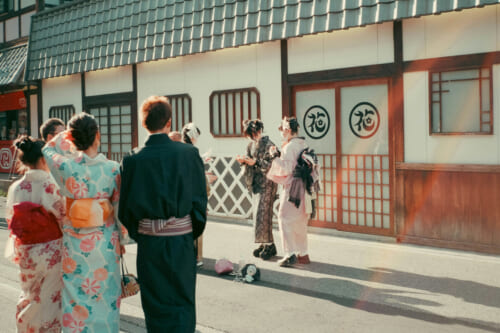
Tuesday’s workday closely mirrored Monday’s, so I’ll skip ahead to the evening. Recently, I started taking lessons in nihon buyo or traditional Japanese dance, as a creative way to reconnect with my childhood as a ballerina.
Starting over is humbling. I wobble now as I once did in my first pair of pointe shoes, only this time the clumsiness feels thrilling, like stumbling through toddlerhood with adult awareness. Ballet trained me to lift skyward; nihon buyo demands rootedness. As my teacher explains, it’s heaven versus earth: European cultures looked up for its gods, while rice-growing Japan revered the soil beneath.
Beyond the aching thighs, the dance etches old etiquette and quiet spirituality into my body — an embodied history lesson no lecture could rival. Each step feels like a small bridge to the people of the past I spend my days studying.
Wednesday
After two days of freelance work, I set Wednesday aside for academic research at home. I study narratives on women in early modern Japan, though I’ll spare you the nerdy details and offer instead a glimpse of a scholar’s quieter day.
My desk is my writing haven, its shelf lined with books that shift with the seasons of my research, like leaves changing over the year. Research days are hushed: less keyboard clatter, more page-turning, with scratching of scribbles now and then. Before closing, I read an article linked to my former MA supervisor, Professor Curtis Anderson Gayle, who is on sabbatical leave at Oxford yet still kindly nudging me along from afar — in preparation for our next exchange.
By evening, dusk mixed peach with storm-cloud gray. I jogged the neighborhood to remind my body it moves, then let my thoughts finally settle where they always clarify best: beneath the steam of a hot shower.
Thursday
Looking back, I regret not scheduling more human interactions this week — no interviews, no meetings. But let it be said: my work thrives on the kindness of others.

Indeed, a bright moment came on Thursday morning when a past interviewee sent me a photo of my article, which she had turned into a guide and placed beside her restaurant’s menu. I’ll also have the pleasure of joining their October agricultural event in a region tied to my historical research. Encounters like these make writing so rewarding, connecting my intellectual pursuits with the living traditions they trace.
Most of Thursday was spent preparing for my weekend trip, but I’ll end with a reflection on the commute. From my home in western Tokyo, trips to the city center are long, but I’ve learned to treat the chugging train cars as a mobile classroom. That day, I read a nonfiction monograph on the way in and listened to a MasterClass audio lesson about photography on the way back. Far from wasted, these rides let me travel twice — once through the city, and once through words.
Friday
My home is shared by three generations: my grandmother, my parents and aunt, and my sister and me. I hadn’t written them into my daily agendas, but they’re the quiet foundation to everything I do. For Friday’s entry, I want to focus on them.
In the morning, I drove with my mother to the department store for rice crackers — souvenirs for my weekend trip. Meanwhile, my mother ordered parcels of salt-dried food for elderly relatives. “They’re easy to eat with rice,” she said, reminding me how care takes practical form.
We then visited my paternal grandmother at the nursing home. Usually, my mother comes on weekdays, my father on weekends, and my sister and I tag along whenever we can. Visits aren’t always smooth, tears, irrational tempers, but I learn from my parents that familial love often means choosing patience over being right.
In the evening, we gathered for my mother’s homemade dinner. If my father is the household’s sturdy foundation, she is the pillar keeping us interconnected. Together, they teach me how to live with purpose beyond oneself.
Weekend
I spent the weekend in Indonesia with Professor Riela Provi Drianda and her students from Tokyo City University. As an undergraduate student, I worked under her guidance on a storybook preserving Bajo Mola’s oral traditions, and this trip felt like a natural continuation of that journey. We joined cultural and historical excursions around Jakarta that gave me inspiration for writing — best told through photos — and I gave a guest lecture at CORE Indonesia, sharing my historical research and how cultural narratives can strengthen communities and open new economic possibilities.

Below: JICA Indonesia Office
Days like these remind me that history isn’t meant to gather dust on old shelves. They give real-life meaning to my otherwise solitary work and it’s proof that the past is most alive when shared with people who are shaping the present.
Below: Girl Scout event at Taman Mini Indonesia Indah
Thank you for following me through a week in my life, and wishing you all the happiness in yours.





No Comments yet!