Located in the far northeast of Tokyo, along the Edo River which marks the border with Chiba Prefecture, you’ll find Shibamata. A town unlike many others, where Tokyo’s Showa-era charm is still part of daily life. From its centuries-old temple to a shopping street lined with local vendors and cafés, Shibamata offers something rare in a city obsessed with innovation: continuity. For film buffs, there’s even an entire museum dedicated to Otoko wa Tsurai yo — a long-running Japanese film series from the 1960s that helped cement Shibamata’s identity in popular culture.
Shibamata: The Path to the Past
Upon exiting the station and leading directly to the gates of a historic 17th-century Buddhist temple, Taishakuten Sando doubles as Shibamata’s main shopping street. The word “sando” in Japanese refers to a path leading to a shrine or temple. Left untouched by the devastating air raids of World War II, Shibamata’s sando still retains a nostalgic atmosphere, with its wooden architecture, tiled roofs, and colorful signs. It’s lined with restaurants and shops selling everything from rice crackers and local river fish to konyaku and grilled eel. Perhaps the most unique offering is a kind of rice dumpling known as kusa dango, literally meaning “grass dumplings.” These chewy, green sweets are flavored with yomogi (Japanese mugwort), a wild herb long believed to have health benefits. Originally made as a seasonal treat, kusa dango became associated with Shibamata thanks to the abundance of mugwort found along the Edo River.


 Taishakuten Sandō
ESTABLISHMENT POINT_OF_INTEREST TOURIST_ATTRACTION- 7 Chome-7 Shibamata, Katsushika City, Tokyo 125-0052, Japan
- ★★★★☆
You’ll also find a few dagashiya (retro candy stores) near Taishakuten Sando. The word dagashi literally means “cheap sweets,” and that’s exactly what they do: selling inexpensive candy and other snacks for just a few yen. Their popularity peaked in the 1970s and 1980s, when they served as after-school hangouts, but, with the spread of convenience stores and supermarkets, many dagashiya have since disappeared. The ones that remain carry a powerful sense of nostalgia.
Where Spirituality Meets Artistry
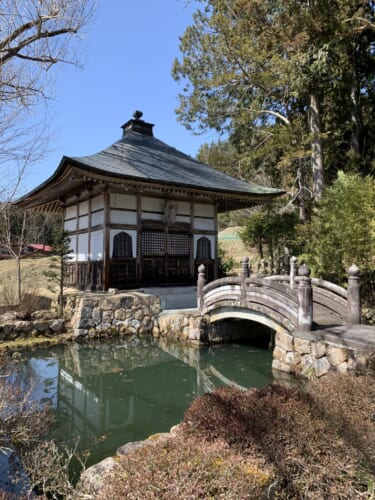
Continuing down the street and passing through an intricately carved Nitenmon gate, you enter Shibamata Taishakuten—formally known as Kyoeizan Daikyoji Temple. Founded in 1629 and dedicated to Taishakuten (also known as Sakra or Indra), a Buddhist deity associated with protection, order, and defense of temples. Shibamata Taishakuten is today best known for 10 large wooden panels, housed in a gallery that encircles the main hall, which depict scenes from the Lotus Sutra—one of the most influential texts of Japanese Buddhism. Completed by master craftsmen in the early 20th century, each panel is a work of art, showcasing celestial figures, animals, plants, and battles that bring ancient teachings to life. Behind the gallery there’s a beautifully maintained garden with an elevated path, koi ponds, and a traditional Japanese tea room.
- Shibamata Taishakuten
ESTABLISHMENT PLACE_OF_WORSHIP POINT_OF_INTEREST - 7-chōme-10-3 Shibamata, Katsushika City, Tokyo 125-0052, Japan
- ★★★★☆
Shibamata Taishakuten is open daily from 5am to 8pm on weekdays and until 5pm on weekends. Admission to temple grounds is free of charge. That being said, access to the gallery and garden (both of which close earlier at 4:30pm) requires a small, cash-only admission fee of 400 yen for adults or 200 yen for elementary and junior high school students.
Step Into the World of Tora-san in Shibamata
Just a 5-minute walk from Shibamata Taishakuten, Tora-san Museum is dedicated to the legacy of Otoko wa Tsurai yo (It’s Tough Being a Man)—a long-running Japanese film series that follows the misadventures of Torajiro Kuruma (aka Tora-san), a kindhearted, but unlucky traveling salesman from Shibamata. The series holds the Guinness World Record for the longest-running movie series starring a single actor and, even if you’re not familiar with the films, the museum is definitely worth visiting. Inside, you’ll find interactive exhibits, full-scale and miniature recreations of film sets, and displays about the history of Shibamata.
- Tora-san Museum
ESTABLISHMENT MUSEUM POINT_OF_INTEREST - 6-chōme-22-19 Shibamata, Katsushika City, Tokyo 125-0052, Japan
- ★★★★☆
There’s also a connected museum exploring the life of Yoji Yamada, who directed nearly all of the Tora-san films, and the TORAsan Cafe, which serves a few classic Showa-era desserts. With a multi-pass ticket, visitors can also visit Yamamoto-tei, a beautifully preserved residence that showcases distinctive features from the late Taisho and early Showa eras. It’s also a popular location for taking a break and having some tea or Japanese sweets, while viewing the traditional shoin-style garden.
- TORAsan cafe
CAFE ESTABLISHMENT FOOD - 6-chōme-22-19 Shibamata, Katsushika City, Tokyo 125-0052, Japan
- ★★★★☆
The Tora-san Museum is open daily from 9am to 5pm. Tickets cost 500 yen for adults or 300 yen for children and students. There also is a discounted 200 yen ticket available for visitors 65 and older. Another option is a 600 yen multi-pass ticket, which includes entry to both the Tora-san Museum and Yamamoto-tei.
- Yamamoto-tei
CAFE ESTABLISHMENT FOOD - 7-chōme-19-32 Shibamata, Katsushika City, Tokyo 125-0052, Japan
- ★★★★☆
Strolling the Edo River
Just outside the museum, a raised walkway leads to the banks of the Edo River. Here you’ll also find Shibamata Bicycle Rental Center, which is perfect, since running alongside the river you have some of the best bike paths in all of Tokyo. There’s also a number of parks, flower gardens, and Yagiri Ferry Crossing, a ferryboat platform established in the early Edo period. Renowned for inspiring a number of songs and novels, it is the only traditional ferryboat river crossing in Tokyo today.
Yagiri Ferry Crossing is open everyday from 10am to 4pm during summer months, but operates only on weekends and special occasions during winter. As might be expected, service can be suspended without notice due to bad weather. That being said, it costs just 200 yen for a one-way trip.
- Yagiri-no-watashi Katsushika Side
ESTABLISHMENT POINT_OF_INTEREST - Japan, 〒125-0052 Tokyo, Katsushika City, Shibamata, 7-chōme−18 先
- ★★★☆☆
Getting to Shibamata
Less than 30 minutes away by train, Shibamata is surprisingly easy to get to:
- From Keisei-Ueno Station, take the Keisei-Kanamachi Line directly to Shibamata Station, which serves as the town’s main gateway. All sights are within walking distance.
- From Nippori Station, ride the Keisei Line to Keisei Takasago Station, then transfer to the Keisei-Kanamachi Line and continue to Shibamata Station.
- And, from Otemachi Station, take the Tozai Line (Rapid for Tsudanuma) to Nihombashi Station, transfer to the Asakusa Line, and continue to Keisei Takasago Station, where you’ll transfer to the Keisei-Kanamachi Line for the final leg to Shibamata Station.
- By car, Shibamata is only about 45 minutes from central Tokyo via the Shuto Expressway.
Cover image: mos design




No Comments yet!