On our last evening in Arida City, we stood atop the observation deck along the mountainous Arida Mikan Road, surveying the mikan tangerine orchards and rugged emerald coastline fading into the distance. The bustling city of Osaka is less than two hours away by train, but here, I could feel the tranquility of the land and sea, the urban sprawl a distant memory.

This modest city on the Wakayama coastline, a convenient stopover for those exploring the historic Kumano Kodo pilgrimage route, embodies the slow life that we all need and crave. Three days in Arida City is what it takes to re-center yourself — three days of absorbing its soothing nature, vibrant cuisine, and cheerful hospitality.
Day One: Exploring the Landscapes of Arida City
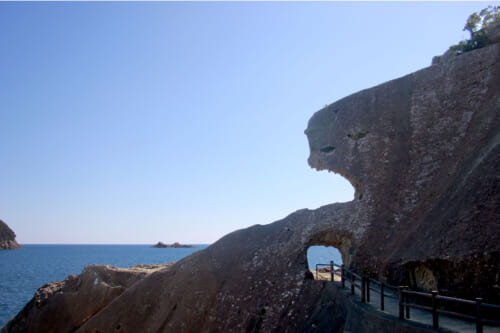
We began the morning getting to know Arida in the best way possible, on foot. We followed the road down the coastline until it narrowed into a hiking trail leading up a forested path. This is the route to Miyazaki-no-hana Cape, a rugged outcropping where the Arida River meets the Kii Channel. You can’t access the ocean from up here, but the view is impressive. On a clear day you might see Tokushima Prefecture on Shikoku Island, the smallest of Japan’s main islands, in the distance. Along the hike, we stopped at Arakoshi, a hidden scenic cove, to cool our heels and enjoy the sensation of water lapping at our feet.


It takes a little over an hour at a reasonable pace to hike to the cape, and when you return to the parking lot, you might be feeling a little hungry from your walk. Hama no Utase is a popular destination for local residents to shop for fresh seafood and produce, as well as dine in the spacious, modern restaurant. While there is a variety of seafood dishes to enjoy at the restaurant, I chose the incredibly fresh kaisen-don (fresh seafood rice bowl) that spilled over the edges of the bowl, while one of my companions opted for the ebi tendon (shrimp tempura rice bowl), piled high with a variety of seafood and vegetable tempura. Even after working up an appetite hiking to the cape, the huge portions at Hama no Utase ensured we were satisfied.
After lunch, we decided to take in another of Arida’s famous views, driving to nearby Yabitsu Bay. This picturesque neighborhood thrived as a resort area in the heydays of bus tours, once a staple of domestic travel. As travel habits changed, many of the resorts and tourism-related facilities shut down, but the beauty of the area remains as a sort of frozen-in-time Mediterranean village.

A local company, Yabitsu Village, has taken advantage of the stunning scenery here, establishing a facility where visitors can camp, barbecue, fish, or participate in various water sports, such as SUP (Standup paddleboarding). Guided tours by kayak and snorkeling are available for two of the area’s hidden gems: the Blue Cave and Green Cave, hidden in the crystal waters along the coastline. We lacked the time in our schedule to participate in any of Yabitisu Village’s enjoyable activities. Still, wandering the narrow, winding hillside streets, visiting tiny shrines, and discovering impromptu art displays was a charming activity in itself.

In the evening, we stayed at Matsubayashi, a modest Japanese inn run by Hiroji Matsubayashi — a jack of all trades. Matsubayashi will happily share information about the various types of businesses he is involved in, from providing large-scale lodging spaces for camps and groups of schoolchildren to deep-freezing and exporting Arida’s fresh fish, as well as producing pet food from seafood waste that is non-consumable by humans.
 Matsubayashi Accommodation
ESTABLISHMENT LODGING POINT_OF_INTEREST- Hama-1769-1 Hatsushimachō, Arida, Wakayama 649-0306, Japan
- ★★★★☆
The rooms at Matsubayashi are standard Japanese-style: a tatami-mat floor with a low table, minuscule television, and a utilitarian futon bed. It’s the meals at Matsubayashi, however, that truly shine including portioned multi-course dinners and a hearty Japanese breakfast. We were offered several choices for dinner courses, one featuring hamo, the seasonably available conger eel from the waters around Arida, and another featuring tender Wakayama wagyu beef. Even the standard dinner was spectacular, with the freshest sashimi from that particular morning’s catch.
Day Two: From the Sea to the Mountains
We rose early from our futons at Matsubayashi for a memorable excursion to Oi Port to witness the fish auction. This by-appointment-only activity is similar to the renowned Tsukiji (now Toyosu) fish market tour at a more intimate level; with the help of a guide, you can stand shoulder-to-shoulder with local fishermen and wholesalers to witness the auction live. During quieter periods, you might even engage in a conversation with local fishermen with the help of the guide; one of them was a huge baseball fan and was delighted when I gave him an MLB trading card of a well-known Japanese baseball player.
The auction is relatively small, and things progress quickly. Still, there was plenty of time to photograph the action and get a preview of what fish would be featured in the dishes of local restaurants later in the day.

After the auction, we returned to Matsubayashi to learn the professional way to make sushi from, surprise, Matsubayashi himself! Not only is he a prolific businessman, but he is also an accomplished chef, having taught the art of sushi overseas in Australia and the US.
Donning plastic gloves and paper hats, our teacher showed us the correct way to form the rice (shari) and cover it entirely with the seafood topping (neta). It’s more than just aesthetics; the way you make nigiri sushi also affects its taste. It turned out that our group members were gifted in sushi-making skills (or at least Matsubayashi lavished praise on us), and soon, we each had a plate of sushi ready to become part of our breakfast.

After breakfast, we explored another vital aspect of Arida’s ancient history: its location along the Kumano Kodo, the ancient set of pilgrimage routes that have been traveled for over 1,000 years. The route that passes through Arida is known as the Kiiji route, frequently used by Japanese nobles as it connects to Kyoto at the farthest end. Much of the Kiiji route is paved over and used for modern transportation, but still passes small places of historical importance.
I started with the Kumano Kodo Folk Museum, a small museum that provides some insight into the history of the route and Arida’s location along it. Arida was one of the places where pilgrims would spend the night, waiting for a ferry across the Arida River the next morning. You’ll unfortunately have to understand quite a bit of Japanese to get much out of the museum, however, so use Google Translate with your camera or another translation app to get the most out of it.

Next door to the museum is Itoga Inari Shrine. From the short line of red wooden torii gates, you’ll recognize it as an inari shrine dedicated to the god of agriculture and often represented by the image of a fox. One of the most well-known inari shrines is Fushimi Inari Taisha in Kyoto, with thousands of red torii gates. You’d be surprised to learn that this humble inari shrine actually predates Fushimi Inari Taisha by several decades..
- Itoga Inari Shrine
ESTABLISHMENT PLACE_OF_WORSHIP POINT_OF_INTEREST - Nakaban-329 Itogachō, Arida, Wakayama 649-0421, Japan
- ★★★★☆
From here, you can follow the Itoga Pass section of the Kumano Kodo past mikan orchards and up the mountain. When you reach the stone marker for the site of the historic pass, you can follow a dirt trail a bit farther along the ridge if you wish to see the small Itoga Inari Inner Shrine at the top of the mountain.
After our hike, it was time for a lunch break at a café serving Wakayama’s most acclaimed food: the cute orange mikan. While most people, including the Japanese, think that Ehime Prefecture is the capital of mikan production, the truth is Wakayama is the number one mikan producer in the country. features this delicious fruit in an array of foods and desserts, including the distinctive BLM, a bacon-lettuce-mikan burger that is a local favorite. If you fancy a dessert instead, the café offers a Citrus Premium Parfait with a variety of locally produced citrus and six different types of citrus juices, from which you can have a sampler to try three of them. The café is run by one of the many mikan farms founded in Arida City.
Leave some room for another treat, however, as your next destination is Gallery SIGMA. The building’s stylish architecture, highlighted by a huge, graceful bonsai pine tree in front, could look right at home in the trendiest Tokyo neighborhood; here it is in humble Arida City.
Although it appears to be an art gallery converted into a chic patisserie, it was actually designed to be a patisserie from the start. The owner wants the desserts created here to be regarded as objects of art, and it is no stretch of the imagination to do so. The desserts here, made from fruits and other ingredients from around Japan, are gorgeous and taste even better than they look. I chose a dessert that looked like a fresh, whole peach perched atop a tart, but when I dug into it, I found the pit had been removed and the center filled with a light cream and custard filling. Other desserts featured domestically grown mangoes, melons, and chestnuts. You can’t eat at Gallery SIGMA, but the helpful staff packed everything safely for us to take back to our accommodation for the evening.
- Gallery Sigma
BAKERY ESTABLISHMENT FOOD - 24 Chida, Arida, Wakayama 649-0313, Japan
- ★★★★☆
That night, we relaxed at Aridagawa Onsen Ayuchaya Hotel Sunshine, which features stylishly renovated rooms in a building adjacent to a hot springs facility. Don’t be fooled by the dated exterior of this facility; the rooms have been refurbished to blend Japanese aesthetics with Western comforts, such as a thick futon bed on a raised platform over traditional tatami floors.

The restaurant is located within the hot springs facility and features exquisite dishes made from Japan’s largest premium fish, the kue (also known as the longtooth grouper). While it’s possible to enjoy a hot pot meal featuring this delicious fish, I was already quite full from back-to-back lunch and dessert earlier in the day, so I opted for a simple meal of chilled, handmade udon and a mini-sized unagi-don (grilled eel over rice) that wasn’t actually very mini.
The hot springs are particularly luxurious here, with both indoor and outdoor baths available for men and women, as well as sauna steam rooms that utilize hot spring water as steam, said to work magic on tired skin.
- 有田川温泉 鮎茶屋・ホテルサンシャイン
ESTABLISHMENT LODGING POINT_OF_INTEREST - Japan, 〒649-0312 Wakayama, Arida, Hoshio, 37−37
- ★★★☆☆
Day Three: Deserted Islands to Hilltop Orchards
The next morning, under clear skies and on calm waters, we boarded a private open-air boat from Hatsushima fishing port to Jinoshima, a small deserted island about 10 minutes away. There is no running water or electricity on the island, and the last full-time inhabitant left after World War II. Before that, nobody could remember who lived on the island.
Today, Jinoshima thrives as a destination for camping, barbecue, and water sports, with a 400-meter stretch of beach lapped by emerald waters facing the mainland. Outdoor activity companies bring all the essentials to the island so groups can camp overnight or for the weekend (reservations required).

We spent the morning in the water, paddling up and down the beach and rocky coast on SUP, laughing and teasing one another as the morning hours melted away.

By lunchtime, we were ready to return to the mainland, clean up, and visit our lunch reservation spot, Tachibanaya, an original ryokan serving shabu shabu hotpots of tachiuo, the shiny silver cutlassfish common in the summer seas here. The raw tachiuo is gently swished in the hotpot until it is slightly, but not over cooked, bringing out its delicate flavor. The hot pot comes with a large set of dishes that include tempura, sashimi, chawanmushi (steamed savory egg custard), and a variety of other small dishes. For our group members who had grown weary of eating seafood at nearly every meal, a delicious fried chicken rice bowl was also available here at a reasonable price.
We managed to avoid over-stuffing ourselves by sharing a few meals between us, so our next stop was for a cool, refreshing dessert made with Arida mikan and milky soft ice cream. Sowakajuen Terrace and Marche is a direct shop of the Sowaka Orchard, a major producer of Arida mikan. In the summer, the mikan fruits are just appearing on the trees and won’t be ready for picking until mid-fall and early winter. When the fruit are on the trees, you might want to reserve a mikan picking experience at nearby Sugai Farm down the road, which offers an opportunity to harvest and eat your own mikan from October to December.
- Sowakaju Orchards
ESTABLISHMENT POINT_OF_INTEREST - Shinmachi-275-1 Miyaharachō, Arida, Wakayama 649-0434, Japan
- ★★★★☆

It isn’t easy to understand the size of Arida’s mikan industry without a visit to Arida Mikan Road, a winding highway near the top of the mountains south of the Arida River. As you drive, you’ll see the vastness of mountainside orchards and imagine the work it takes Arida’s farmers to harvest these sweet little jewels for the rest of the country. With the afternoon sun turning the scenery a brilliant mikan orange, we climbed up to the observation deck, witnessing the beauty of farms and the sea fading into the distance.
Arida City is an easy-to-reach destination along Wakayama Prefecture’s pristine coastline, between the Kyoto/Osaka area and the popular destinations of the Kumano Kodo pilgrimage route. Add a few days at the beginning or end of your visit to Kansai to explore this friendly city. Just a word of advice: a rental car is a necessity to cover most of the places on this itinerary, so be sure to bring an International driving permit from your home country.




No Comments yet!