Akita Prefecture, located in the northern part of Honshu, is blessed with magnificent natural beauty, including the mystical blue of Lake Tazawa and the majestic coastline of the Oga Peninsula. It is an attractive destination for nature lovers. The flavors of Akita are a direct result of the area’s earthly splendor, and many of its regional delicacies can be traced back to its geography. Many travel to Akita to embark on a natural journey, yet at the same time, you must take a trip through a gastronomic gallery of local delights.

Akita’s Geography Shapes the Menu
The topography of Akita is wide-ranging, with the prefecture hosting snow-capped mountains, pristine coastlines, and rugged plains. This rich tapestry of natural features is reflected in its equally varied regional offerings.
Akita’s Inland North and South: Butter Mochi, Iburigakko, and Inaniwa Udon
It’s in the snow-draped northern region of Akita where necessity has given birth to culinary tradition. Due to the difficulty in traversing its icy roadways, public transportation is severely limited during the winter months. Preservation through self-sufficiency was key, and as such, these areas possess a strong hunting ethos. Even the namesake inu (dog), the Akita, was bred as a hunting dog to accompany the matagi (hunters). In this mountainous region, fishing is a herculean task, and cuisine is humbly made using ingredients at hand. A local staple is butter mochi, which is created by kneading butter, egg yolks, and sugar into mochi rice to create a fluffy and sweet treat. A recipe handed down from generation to generation, it’s a product of ancestral wisdom.

In the southern region of Akita, having short daylight hours rendered drying produce nonviable. So, it was through a process of smoking and pickling, where pickled radish would be hung over an open hearth, that the locals would create iburigakko, a sweet, pickled dish. Gakko is an Akita dialect term for pickles. This success through necessity is further seen in inaniwa udon, which is made entirely by hand using pure spring water from the mountain region, high-quality wheat, and salt, through a series of processes including kneading, twisting, crushing, and stretching. Once more, attributed to cold temperatures, the invention of inaniwa udon arose as a quicker heating process was needed for noodle-making in Akita, hence the thinner appearance. As one of the most well-known products of the region, inaniwa udon was often given as a gift to nobility in the 1700s.
The Akita Coast: Welcoming the New Year with Hatahata
While the snow blankets of the North and South render fishing an extremely strenuous vocation, the winter months by the coast of Akita sport a menu that positively revolves around sea life. When the hatahata (Japanese sandfish) arrives by the shores, this is seen as a symbol of the New Year. This fish’s cultural ties to Akita tradition have made it synonymous with weddings and Shinto rituals. As a rice-producing region, hata zushi is a much-celebrated local dish. Methods to prepare the fish differ from family to family, but pickling using rice and malted rice (koji) remains an ancestral tradition. For many citizens of Akita, the New Year doesn’t begin until the hatahata arrives.

The Plains of Akita: A Reputation for Rice
The plains of Akita make skillful use of the region’s status as a rice-making powerhouse. Using its clear groundwater and abundance of rice, this area accounts for around 70% of Akita’s sake breweries. Once more, owing to the cold climate, and paired with the locally grown sake rice, the flavors produced are deep and aromatic. A fitting taste to symbolize Akita’s profound culinary traditions and the attachment to the terroir that supports them.


One dish that exemplifies Akita’s mastery of rice-production is kiritanpo, a rice cake made by crushing rice around cedar sticks and subsequently roasting them. A portable treat that celebrates the generations past that have handed down the recipe; these nourishing rice cakes are an integral part of the diet of a mountain hunter or farmer. The hot pot dish made by simmering kiritanpo together with Hinai chicken and vegetables is called Kiritanpo Nabe. It is one of Akita’s signature local dishes, often prepared during the season of freshly harvested rice, when the grains are at their most delicious.
Tasting the Everyday: Yokote Yakisoba and Babahera Ice Cream
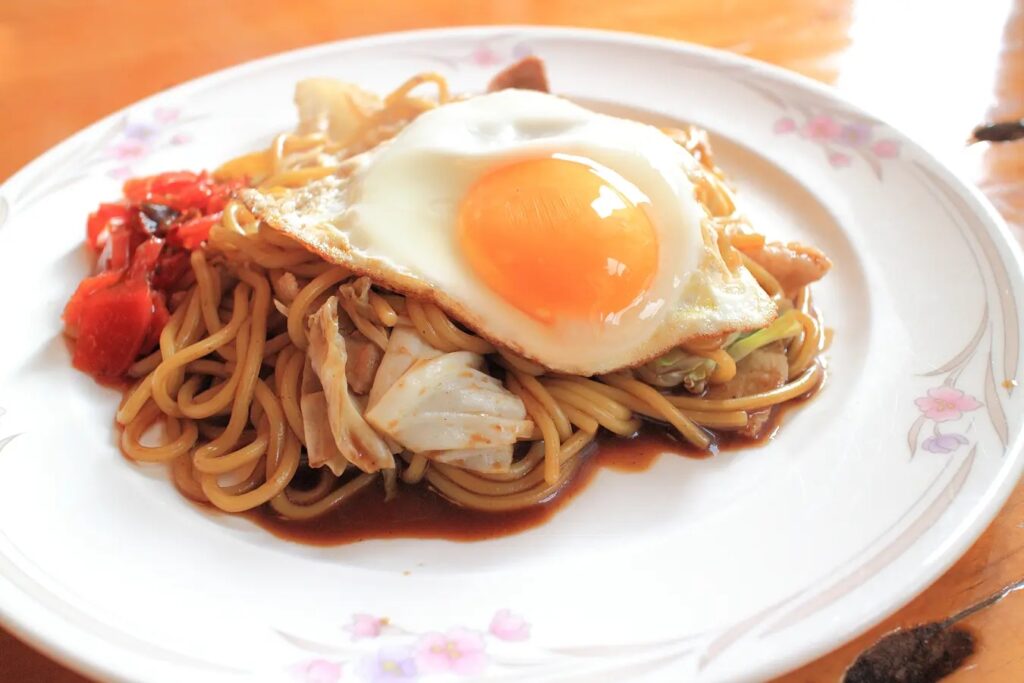
The charm of Akita’s food culture doesn’t stop there. Many of the prefectural staple dishes are themselves a mirror into Akita’s own history and thus are as much a part of Akita as the mountains and the seas that shape it. Yet not all familiar offerings are season and/or environment dependent. Take yokote yakisoba of Yokote City, one of Japan’s “Big Three” yakisoba varieties. These chewy noodles are so popular and integrated into Akita’s daily life, that the annual Yakote Yakisoba Festival is held to decide which establishments best prepare these brilliantly boiled noodles. Topped with an egg and a healthy serving of minced pork and cabbage, possessing a distinctly different flavor from the yakisoba commonly enjoyed in Japan, this bowl is known to satisfy even the most voracious of gourmands. Though do leave some room for dessert.
Babahera ice cream is a summertime staple. Sold by a plethora of street vendors, identified by the colorful parasols that appear above their small stands, babahera is equally as vibrant. Commonly produced in shades of pink and yellow, some vendors can even shape the confection to resemble a rose, in a process known as ‘rose piling.’ The name babahera is derived from the direct translations for baba, an Akita dialect for the senior lady serving the confection and now meaning that it is sold by local residents, and hera, the name for the metal spades used to fashion the ice cream into its floral design.
Menus Crafted by Terroir
Akita’s geographical offerings are plentiful and renowned, much like its cuisine. A prefecture that is lush not only in its green forests and looming mountains, but further in its culinary connection to these natural phenomena. For many of Akita’s commonly cherished dishes, they were crafted out of necessity, passed along familial lines, and now feature on a regional menu that is as varied as the land it inhabits. Be it the kiritanpo nabe, which warms the body when served alongside some of Akita’s nationally heralded rice, or babahera ice cream, which cools during the sweltering summer months, there is a taste for every season.

Sponsored by Akita.









No Comments yet!