Kyushu’s largest city of Fukuoka has long been a gateway to the dynamic, volcanic attractions of southern Japan and its many remote islands. But the old town of Hakata was once a major trading port, and the city’s rich history is reflected in its lively festivals and many traditional crafts. Upon my return from Iki, I decided to spend some time discovering Fukuoka’s more local charms.
Back from Iki at Hakata Port Ferry Terminal, I couldn’t resist stopping for a premium scoop of seasonal amaou gelato, which contained explosively tasty, chunky bits of the sweet strawberry that is native to the region. On this hot summer day, my ferry landing in Fukuoka was certainly off to a gourmet start.
Right in the beating heart of Fukuoka’s trendy commercial district of Tenjin, my first surprise was ascending to the rooftop reception of One Fukuoka Hotel, where the lobby and bar offer sweeping views of the surrounding area all the way to the horizon over Hakata Bay. The friendly staff was dressed in loose earth-toned uniforms that resemble pajamas, setting the tone for a casual, laidback stay in understated luxury. Walls were accented with progressive artwork highlighting a lightning bolt theme that channels this power spot reaching toward the sky.

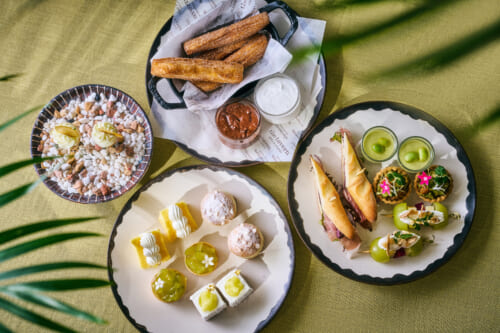
Just one floor down, my own room opened out to a generous terrace facing west, with a view spanning from the mountains to the sea. The same 18th floor hosts an outdoor garden with lounge chairs and a fire pit, as well as an indoor Library Lounge, with a curated selection of books, comfortable armchairs, a coffee maker, and complimentary sweets. I helped myself to some homebaked goodies and enjoyed an impromptu afternoon tea time on my private balcony, watching the sunset over the cityscape.
 ONE FUKUOKA HOTEL
ESTABLISHMENT LODGING POINT_OF_INTEREST- Japan, 〒810-0001 Fukuoka, Chuo Ward, Tenjin, 1-chōme−11−1 ONE FUKUOKA BLDG 18-19F
- ★★★★☆
Two things that Fukuoka is renowned for are yatai (street food stalls), which come to life after dusk, and mentaiko (spicy cod roe), a bright pink delicacy that finds its way into countless dishes. While dozens of yatai line the Nakasu riverside and Tenjin’s central avenue, I headed out to the slightly offbeat Nagahama area to seek out Mentai Chudoku, a yatai with attitude whose name translates to “spicy cod roe addiction.” The intense culinary venture did not disappoint, as I sampled and savored dish after dish of spicy mentai (grilled, seared, boiled, steamed, tartared) prepared right in front of my eyes. The staff maintained an admirably dynamic pace, as I finally surrendered my counter seat to the next hungry customer in a long line of mentai addicts.
- Mentai Chudoku
ESTABLISHMENT FOOD POINT_OF_INTEREST - 3-chōme-14-14 Nagahama, Chuo Ward, Fukuoka, 810-0072, Japan
- ★★★★☆
After a good night’s sleep and early morning at One Fukuoka, I went back upstairs for my energizing rooftop breakfast: a delicious buffet of bread, fruit, salad, and yogurt with all the toppings, complemented by my main course choice of an avocado and marinated salmon open sandwich.
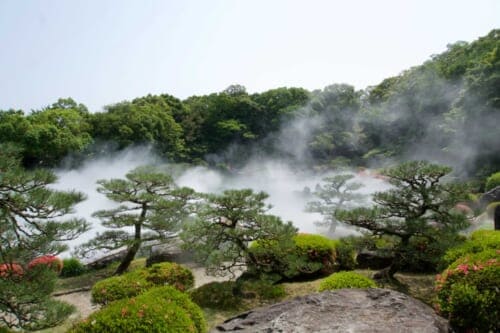
It was perfect weather for a stroll around Ohori Park, named after the “outer moat” that once surrounded Fukuoka Castle. Since 1929, the area has been a public park with a circular walking path lined with yellow sunflowers and centered around a pond, which is traversed by three small islands connected by bridges. That day, it felt like I was joining the locals in their morning exercise routines, as I ambled alongside joggers, dog-walkers, and bicycles. The park also includes a wild bird sanctuary, as well as peaceful perches and shaded areas where I spotted white egrets, black cormorants, pochard ducks, and songbirds. On the southern end, I entered the West Gate of the Japanese Garden, first passing a long Zen garden of sand and rocks, before contouring the landscaped koi pond, which was soon shrouded by a dramatic cloud of white mist.
- Ohori Park
ESTABLISHMENT PARK POINT_OF_INTEREST - Japan, 〒810-0051 Fukuoka, Chuo Ward, Ōhorikōen, 1 公園管理事務所
- ★★★★☆
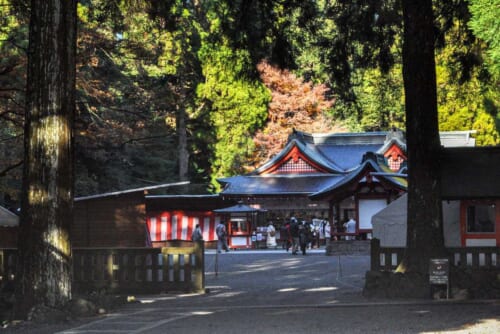
East of the narrow Hakata River, I wandered into Hakata Old Town, beginning at the welcoming gate of Hakata Sennen-no-mon, before crossing the avenue to Kushida Omotesando. Near the end of the street, I popped into the Hakata Machiya Folk Museum, which actually consists of three traditional white-walled structures: one restored weaving house and two reconstructed buildings for the exhibitions and the café. Inside the museum, a video showed scenes of the Hakata Gion Yamakasa Festival alongside old photographs, while upstairs a local artisan was painting a spinning top, one of many local crafts on display. Finally, I entered the lively grounds of the ancient Kushida Shrine, decorated with many auspicious symbols and ornaments, where the popular Yamakasa Festival is held each year.
- Kushida Shrine
ESTABLISHMENT PLACE_OF_WORSHIP POINT_OF_INTEREST - 1-41 Kamikawabatamachi, Hakata Ward, Fukuoka, 812-0026, Japan
- ★★★★☆
Just a short walk from Tenjin, I enjoyed a gourmet lunch at Shiranita, where I was seated in a private room overlooking the Naka River. The chef’s omakase course was exquisite, with dainty dishes presented on colorful tableware, and surprising flavors emerging from familiar ingredients in innovative expressions of Japanese cuisine. My most memorable bites were a juicy Shine Muscat topped with melted tofu, and grilled kamasu (barracuda) sprinkled with grated chestnut and garnished with gingko nuts.
- Shiranita
ESTABLISHMENT FOOD POINT_OF_INTEREST - 4-4 Nishinakasu, Chuo Ward, Fukuoka, 810-0002, Japan
- ★★★★☆
Intrigued by Fukuoka’s longstanding tradition of arts and crafts, I was delighted to participate in a hands-on workshop to craft magemono, circular containers made of bent wood (perhaps best known as bento boxes). At Hakata Magemono Tamaki, 18th-generation artisan Tamaki Shibata described the long process of crafting a magemono, from treating the raw wood to painting the assembled box. She then showed me the detailed technique of cutting, sharpening, and threading the cherry bark through the local cedar wood which resulted in the contrasting dark squares that hold the curved panel in place and give magemono their signature appearance. Although I initially made a small mistake, it was easily rectified, and I was happy to bring back an authentic Hakata souvenir that was undeniably unique.
- "Hakata Magemono Tamaki
ESTABLISHMENT POINT_OF_INTEREST - 2-chōme-2-16 Befunishi, Shime, Kasuya District, Fukuoka 811-2232, Japan
- ★★★★☆
While handcrafted magemono bento boxes are gradually giving way to more convenient modern materials, Shibata is no less excited and curious about the near and distant future of magemono. She tells me about an abstract wall piece she created for a hotel lobby, where it is prominently displayed as a made-in-Hakata artwork above the reception counter. And her son, who was born after 1989, is full of ideas when it comes to using magemono in innovative new ways. Who knows what’s next for forward-thinking Fukuoka?
While my three-day itinerary in Iki and Fukuoka concludes here, many more adventures await along the Golden Route to West Japan. Feel free to create your own journey westward from Osaka and onward through Kyushu.
Sponsored by Fukuoka City.






No Comments yet!