Nagasaki’s story is inseparable from Christianity’s turbulent history in Japan. Sixteenth-century Jesuit missionaries and Portuguese traders were among the first to anchor in its harbor, but under the Tokugawa shogunate (1603–1868), the faith was banned from 1614 to 1868, and believers were driven underground. For over two centuries, Nagasaki’s Kakure Kirishitan (Hidden Christians) practiced in secret, even disguising the Virgin Mary as Buddhist Kannon images. It wasn’t until the 1860s and 1870s (late Edo and early Meiji eras) that hidden communities openly returned to the Church. In 2018, a dozen Nagasaki sites, including Oura Church and rural Sotome villages, were inscribed by UNESCO. I traveled to Nagasaki to visit five such destinations including soaring cathedrals and silent coastal churches that revealed how faith and culture endured in Nagasaki.

Urakami Cathedral
I begin at Urakami Cathedral situated in northern Nagasaki. The sun is low and soft clouds swirl over the twin spires of the towering stone structure. This Romanesque-style basilica, which is officially the Church of the Immaculate Conception, was rebuilt in 1959 after the original was leveled by the 1945 atomic bomb. Inside the nave, shafts of light fall through vibrant stained-glass windows onto the gleaming wooden pews and a simple altar. I feel the hush of prayer, recalling that this neighborhood once sheltered many Catholics; the bomb claimed thousands of lives here. This church is a Catholic church named after the martyrs who were executed for their faith in 1597. Even today, the rebuilt Urakami stands as a symbol of faith and a place for praying for peace; a resonant start to understanding Nagasaki’s Christian legacy.
 Urakami Cathedral
TOURIST ATTRACTION- 1-79 Motoomachi, Nagasaki, 852-8112, Japan
- ★★★★☆

Oura Church
My next stop is Oura Church, Nagasaki’s historic wooden-brick cathedral of the Hidden Christians. In the afternoon light, I stroll up the stone steps of Minamiyamate Hill, surrounded by colonial-era houses and camellia gardens. Whitewashed brick walls emerge from among the trees, and white plaster walls emerge from the foliage. Built in 1864, Oura is the oldest surviving Western-style church in Japan; entering feels like stepping into a late-19th-century Nagasaki postcard. Inside, I join a sparse crowd of worshippers, as sunlight filters through the slender Gothic windows.
- Ōura Cathedral
CHURCH ESTABLISHMENT PLACE_OF_WORSHIP - 5-3 Minamiyamatemachi, Nagasaki, 850-0931, Japan
- ★★★★☆
In the past, believers who were forbidden to practice Christianity gathered here in secret. In fact, when Japan officially lifted the ban on Christianity in 1873, some 30,000 people nation-wide revealed themselves as Christians. The church’s statues and a stained-glass window portraying Christ’s Passion hint at that layered history.
After touring the nave, I exit to explore the grounds, which is full of Christian statues, reminding me that this hill was once a foreign settlement. The view over downtown Nagasaki and the harbor is open and wide — a far cry from the days of isolation.
Twenty-Six Martyrs Museum (Nishizaka Park)
That afternoon, I descend to the city center and climb the stone stairs of Nishizaka Park. The air cools and the Atlantic breeze brushes past monuments. This hillside park is the execution ground of 1597, where 26 Catholic believers including six foreign priests and 20 Japanese laymen were crucified by order of the ruler Toyotomi Hideyoshi. A museum, with unexpectedly lively and colorful murals (and the majestic bronze martyr monument itself) stands at the top of the hill, commemorating those martyrs. No one else is around in the spacious, open courtyard in-front of the 26 statues and the atmosphere is solemn, and fitting for the scenery and what it represents.
- Twenty-Six Martyrs Museum and Monument
ESTABLISHMENT MUSEUM POINT_OF_INTEREST - 7-8 Nishizakamachi, Nagasaki, 850-0051, Japan
- ★★★★☆
I wander the park’s winding paths. Stone crosses stand quietly beside Japanese maples, and I gaze out over the harbor visible beyond the rooftops. Information plaques note that visitors, as they walk, are following in the footsteps of history. For a moment, the contrast of city and coastline reminds me how far Nagasaki has come: once a forbidden ground of faith, now a peaceful memorial where anyone can pause to remember.
Shitsu, Sotome Area (Hidden Christian Sites)
I venture further west of Nagasaki into the rugged Sotome coast, where hidden Christian history is still tangible. After a very windy drive, I arrive at Shitsu Village, where the little Shitsu Church (a modest white building completed in 1882) sits on a grassy hill overlooking the sea. Its two small steeples and low roof were designed to withstand strong ocean winds, which is whipping hard against the façade this day and adds a harsh element, and almost a metaphor for the site’s history of oppression. The interior is plain but resonant, with wood floors and a simple altar. A volunteer says this church was built after the ban was lifted, a monument to the many villagers who, for generations, secretly kept their faith.
- Shitsu Catholic Church
CHURCH ESTABLISHMENT PLACE_OF_WORSHIP - 2633 Nishishitsumachi, Nagasaki, 851-2322, Japan
- ★★★★☆

Nearby, lies the Endo Shusaku Literary Museum. Endo was a Nagasaki novelist who famously wrote Silence, a dramatic tour de force about Japan’s hidden Christians later adapted for film by Martin Scorsese. The small museum houses manuscripts, clothing and artifacts from his life, and photo-murals of the Sotome villages. In the library corner, I see pictures of Shitsu’s Kakure Kirishitan elders from the 1930s, standing quietly with rosaries. Next, I stroll the narrow streets and peer over stone walls at old thatched houses, some still marked as former secret Christian homes. Throughout the morning, I feel the hush of history: on every side are winding fields and granite foundations where the faithful once prayed.
Under the ban, many Saga lords actually tolerated secret faith here, and hidden Christians even buried their dead with their feet pointed to the south instead of Japan’s usual Buddhist tradition, so the coffin faced Europe. Such small acts of defiance remain woven into this community.
Setre Glover’s House Nagasaki
That evening I check into Setre Glover’s House, a boutique hotel in the former foreign settlement of Minamiyamate which is situated near Oura Church. The hotel occupies a beautifully restored 1900s Western-style villa, surrounded by camellias and wrought-iron lampposts. From the cobblestone courtyard at the entrance, the bay’s lights twinkle in the distance. The clerk mentions that the building once belonged to a hotel for international visitors — its preserved dining rooms and lounge feel like stepping back into Nagasaki’s Victorian era. In my own wood-paneled room, I can see both the harbor and the city’s tiled rooftops. It’s easily one of Nagasaki’s most impressive city views.
- Setre Glover's House Nagasaki
ESTABLISHMENT FOOD LODGING - 2-28 Minamiyamatemachi, Nagasaki, 850-0931, Japan
- ★★★★☆
The walls of the hotel’s seaview restaurant are decorated with antique maps of Nagasaki, and my table faces a window overlooking the city lights. From here, I reflect on everything I’ve seen: the blend of East and West, the layers of history visible in stone and stained glass. Setre itself seems emblematic — a space where modern travelers can literally sleep in history. As I walk back to my room, I reflect on how this restored villa very much fits into the historical narrative of Western expression in an Eastern context, that I’ve experienced during this Nagasaki visit. Indeed, staying here offers a quiet coda to my Christian history journey, wrapping up old stories in new comforts.
Once Hidden but Never Forgotten
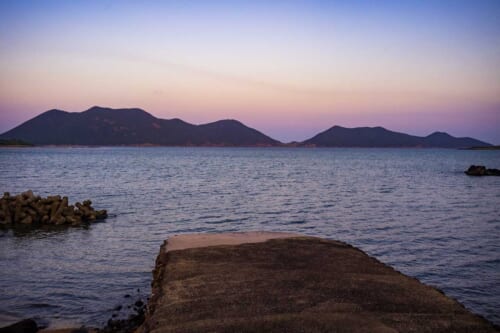
The next morning, from Setre’s terrace I gaze at Nagasaki’s harbor one last time. Over 400 years of hidden faith seems to come alive in these streets: the solemn cathedral, the sunlit wooden churches, the rustling coastal fields. At each site, be it the neo-Gothic cathedral, the martyrs’ park, or a village chapel, I saw evidence of a faith that survived against the odds and it’s clear that the legacy of Nagasaki’s hidden Christians endures in architecture, archives, and local memory. And as I leave Nagasaki’s shores, I am grateful for having walked these hidden paths and for the chance to witness how the story of the Hidden Christians still lives on today; relevant to travelers of any faith, or lack thereof — as one of Japan’s most fascinating historical chapters.
Sponsored by NAGASAKI CITY.






No Comments yet!