If you have ever had the pleasure of visiting Niigata Prefecture, you’ll know too well the exceptional landscape that this area of Japan affords and, in winter, the dazzling amounts of snowfall that overcomes and subdues the homes and buildings that are located there. The summer evening sky is also really something to behold, like a secret surprise as the sun slowly sets with dragonflies fluttering and then a sudden and terrific darkness which is splattered with glimpses of our minuscule galaxy and perhaps other galaxies. Yasunari Kawabata, Japan’s first literary Nobel Prize winner (in 1968), wrote about this very phenomenon and geographical area in his seminal work Snow Country. “The stars, almost too many of them to be true, came forward so brightly that it was as if they were falling with the swiftness of the void.”
Artists from all kinds of disciplines occasionally become synonymous with a town, city, or region; locations that shape, nurture and mirror their work. Think of Bjork and Iceland, The Smiths and Oasis with Manchester, Cormac McCarthy with the American Southwest, and Wong Kar-wai’s cinematic marriage with Hong Kong. Award-winning Scottish artist Kathleen Reilly, although a proud Glaswegian, has found herself, at least for the last five years or so, profoundly connected and associated with the cities of Tsubame and Sanjo in Niigata Prefecture.
Tsubame-Sanjo and Oku
When I ask Reilly, over a Zoom call, what Tsubame-Sanjo (as the area has collectively become known) is like as a place in which to live she answers, “So, although the station is called Tsubame-Sanjo, it’s actually divided. The northern city is called Tsubame and the southern city is Sanjo. And I like to think they both have their own idiosyncratic charms. They are also seen, there, as two different cities. So, Tsubame in the north is where I trained, which is predominantly known for cutlery, manufacturing, and machinery and in the South in Sanjo, which is more famous for blacksmithing and forging. So, they do have different kinds of industrial histories.”
Reilly attributes her spark of interest in Japan and especially the region of Tsubame-Sanjo to an exhibition at Japan House in London titled Biology of Metal: Metal Craftsmanship in Tsubame-Sanjo in 2018 when she was a graduate student in metalwork at the prestigious Royal College of Art. Having graduated with an undergraduate degree in jewelry from the acclaimed Glasgow School of Art earlier in her artistic career, Reilly was, after an intensive selection process, awarded a Daiwa Scholarship which gave her the opportunity to study Japanese intensely for a year in Tokyo before moving to Tsubame-Sanjo to learn about and immerse herself in the area’s famed artisanship at the renowned Ohizumi Bussan in late 2020.

Reilly, the winner of the globally acclaimed Homeware design of the year 2022 award by leading art and design web-magazine Dezeen, specializes in metalwork and her lauded knife design Oku (created in collaboration with artisans in Tsubame-Sanjo) incorporates a unique folded handle inspired by traditional Japanese place settings. Combining local materials, age-old techniques, and innovative design, Oku reimagines the role of cutlery, offering both function and a fresh dining aesthetic.

Available from Reilly’s webstore, Oku has already been picked up by some of the best restaurants in the world and in addition to her artwork for leading UK musician Shygirl’s 2023 album Nymph_o, Reilly’s star is definitely in the ascent in both the art and design industries.
Travel Tips and Reilly’s Artistic Future
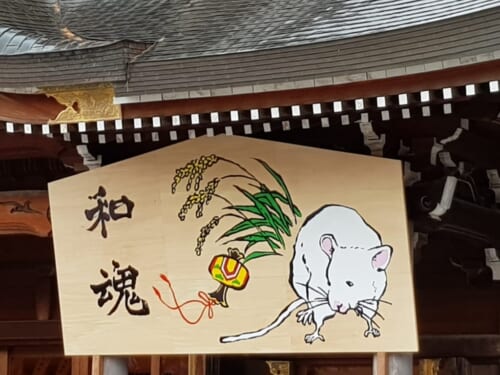
When I ask Reilly, who now lives and works in central Tokyo, what she would do on her days off when living in Tsubame-Sanjo she says, “Yahiko Shrine is huge and beautiful and nearby is brilliant for nature. There are also a lot of hiking trails and actually there’s quite a lot of trendy, little independent cafés and shops in that area of the city.”
The Glasgwegian artist has been, for the last few years, exhibiting her work all over the world including exhibitions in Denmark, London and, currently, Germany. Fans of her work, based in or visiting Japan, don’t need to wait too long for her next show here as she has an exhibition titled Uncovering Functionality planned for the end of the year at (PLACE) by method gallery in Shibuya from December 4 to 14, which aims to showcase British artisanship in dialogue with Japanese society.
When speaking with Reilly, a genuine artisan in her own right, it’s obvious she has learned so much from her time in Tsubame-Sanjo. Until this day she still works with factories in the area who produce her work under her guidance. Reilly encapsulates her experience of working in Tsubame-Sanjo by saying, “it was obviously such a life changing experience. I learned so much. I’m still working with the artisans I met there years later. I’m still connected to the city and I still speak to the people that work there — sometimes every day. I was really fortunate enough to launch my product [Oku] last year and we launched it at an event at Japan House in London and I invited some of the local artisans there too.”

Craftspeople, artisanship, friendship and sheer talent are clear when speaking with Reilly about her craft. I imagine her in Tsubame-Sanjo, speaking and collaborating with the local artisans and the pounding and molding of metal, the incandescent sparks flying from the furnace and the quiet satisfaction when the work emerges into the world, clean and ready for customers, buyers and people that appreciate art and the craft and skills that are involved in creating such beautiful products that are custom made for a lifetime.
Kathleen Reilly’s Recommendations When Visiting Tsubame-Sanjo
In addition to the numerous local craft shops, Tsubame-Sanjo also boasts a vibrant cultural scene. From cozy cafés and fiery curry restaurants to artisanal workshops, here are Kathleen Reilly’s top five recommendations when visiting the area of Tsubame-Sanjo:
 Gyokusendo
ESTABLISHMENT POINT_OF_INTEREST STORE- 2-chōme-2-21 Chūōdōri, Tsubame, Niigata 959-1244, Japan
- ★★★★☆
- Tsubame Coffee
CAFE ESTABLISHMENT FOOD - 2760-1 Yoshida, Tsubame, Niigata 959-0264, Japan
- ★★★★☆
- Sanjo Spice Lab
ESTABLISHMENT FOOD POINT_OF_INTEREST - 11-63 Motomachi, Sanjo, Niigata 955-0072, Japan
- ★★★☆☆
- Tsubame Industrial Museum
ESTABLISHMENT MUSEUM POINT_OF_INTEREST - 4330-1 Ōmagari, Tsubame, Niigata 959-1263, Japan
- ★★★★☆
- FACTORY FRONT
ESTABLISHMENT POINT_OF_INTEREST STORE - 14-3 Higashiōta, Tsubame, Niigata 959-1289, Japan
- ★★★★☆
Feature image courtesy of Riyo Nemeth





No Comments yet!