In October 1995, Neon Genesis Evangelion premiered on TV TOKYO. For the 30 years since, Hideaki Anno’s psychoanalytical deconstruction of the mecha anime genre has remained an omnipresent force within the Japanese pop culture sphere. Anno’s 1997 film, The End of Evangelion, was ironically just the beginning, with a four-piece ‘Rebuild’ film series having been released between 2007 and 2021. These staggered installments have ensured that while original fans may have grown up watching the novel Eva series on a heavy CRT television, they are now introducing their kids to the recent films on a 1080p flat screen. However, it is not only official media releases that have kept orange-colored blood pumping through the Evangelion franchise, as true to the form of ‘Cool Japan,’ it is the collaborations and merchandise that demand that every Eva fan heed the call to get back into the robot.
The Wealth of Collaborations
Discussions around the narrative complexities and psychological profundities that surround Evangelion are outnumbered only by the myriad of merchandising and collaborative campaigns that the franchise has spawned. From clothing lines and coffee cans to McDonalds and pachinko parlors, the abyss of Evangelion-related merch reaches further than the radius of Ramiel. To celebrate the franchise’s 30th anniversary, these promotions have gone into hyper speed. Examples include an All Of Evangelion exhibition at Roppongi Hills, an Animate Café collaboration, and an exclusive goods campaign at the Evangelion Store in Hakone.
Hakone and Tokyo-III
It is through the latter example of Hakone that a fan may travel to Evangelion’s fictional home of TOKYO-III, for the mountainous town west of Tokyo plays its role in reality. Located approximately 1 hour and 30 minutes from Shinjuku Station via the Odakyu Line, Hakone has long been a popular day-trip destination for hot-spring hunters and lovers of natural beauty, with Lake Ashi providing stellar views of Mount Fuji on a cloudless day. Though thanks to its 1:1 detailing in the Neon Genesis Evangelion anime, with Lake Ashi and Owakudani appearing in the series and several NGE-adorned vending machines dotted about the town, Hakone is now a pilgrimage site for headstrong Eva pilots, especially during the franchise’s 30th year. So, set an early alarm, pack a hiking bag, and board the Odakyu Line’s rapid service to Odawara Station. Here is the best way for an Evangelion fan to enjoy a day and night in Tokyo-III (hopefully with fewer Angel attacks).
A Day in Tokyo-III
As previously mentioned, Hakone is situated approximately 1 hour and 30 minutes from central Tokyo, with Odawara Station being the main point of transfer close to the mountain town. From this station, it is advised for visitors to purchase the Hakone Freepass, a discount travel pass that provides unlimited access to eight transportation networks within the town and discounts for several attractions. The pass costs around 6,000 yen for 2-day usage. When leaving Odawara Station, some will board the Hakone Tozan bus to Lake Ashi, but for fans of Eva, the next step is to grab a seat on the Hakone Tozan Railway to Hakone Yumoto Station, the site of the Evangelion Store. Make sure to grab a window seat to catch some fabulous mountain views.

Evangelion Store at Hakone Yumoto Station
Located at the Front Exit of Hakone Yumoto Station, this official Evangelion Store, affectionately referred to as the EVA-YA, is a must-visit for enthusiasts. Opening in 2012, the EVA-YA sells a litany of related merchandise, from purple and green snacks that match EVA-01, to teacups, towels, tees, and… tea. But for the 30th anniversary, the store has gone berserk (though thankfully not with the bloodlust of EVA-01), as much of the merchandise available is not only exclusive to the Hakone store, but further exclusive to the 30th anniversary celebrations. The store is abundantly decorated in Evangelion extravagance, and as the store welcomes still photography, take some time to shoot while you shop.

Once you have sufficiently stocked up on swag and sweets, hop back on the Hakone Tozan Line in the direction of Gora, now bound for the Open-Air Museum.
 Evangelion Store
ESTABLISHMENT HOME_GOODS_STORE POINT_OF_INTEREST- 707-1 Yumoto, Hakone, Ashigarashimo District, Kanagawa 250-0311, Japan
- ★★★★☆
Hakone Open Air Museum
Opening in 1969, the Hakone Open Air Museum was founded to bring the medium of sculpture to Japan, with the museum being the first of its kind in the country. With its overarching theme of ‘environmental sculpture,’ the museum makes significant use of its luscious outdoor surroundings, with hills, streams, and ponds providing a tranquil backdrop for a scintillating selection of sculptures.
In its dedication to the sculpted form, the museum further operates a Picasso pavilion which plays host to over 300 original works of the Spanish master viewable to guests.
After exiting the museum, board the Hakone Tozan bus to Motohakone-ko, the stop for Lake Ashi.
- The Hakone Open-Air Museum
ESTABLISHMENT MUSEUM POINT_OF_INTEREST - 1121 Ninotaira, Hakone, Ashigarashimo District, Kanagawa 250-0493, Japan
- ★★★★☆
Lake Ashi, Hakone Checkpoint, and the Peace Torii
As the sun reaches its highest point, and you disembark the bus, you will find there is a variety of excursions around the Lake Ashi area. The lake itself can be traversed via the Hakone Sightseeing Cruise, which anchors at both Hakonemachi-ko and Motohakone-ko; the former provides access to the Hakone Ropeway and Mount Owakudani.
There is also the Hakone Checkpoint, which was established by the Tokugawa Shogunate to keep the city of Edo (modern-day Tokyo) safe. The last remaining of these formidable defensive points, the checkpoint was restored to its original glory in the late 2000s and now acts as a mirror into the Edo period. Climbing up to the toomi basho (guard cabin) will reward you with panoramic views of Lake Ashi, Mount Fuji, and Hakone’s splendor.
Hakone-jinja (shrine) is also just a walk from Motohakone-ko. Constructed in the 9th century and home to many distinct torii gates, Hakone-jinja is most well-known for being the site of the ‘Peace Torii,’ a looming red torii that sits on the edge of Lake Ashi. Symbolizing the point of transition between the land of the living and the spiritual realm, the Peace Torii is now a fervently popular photo spot, as it stands tall against a beautiful backdrop of the lake that it inhabits.

- Hakone Shrine
ESTABLISHMENT PLACE_OF_WORSHIP POINT_OF_INTEREST - 80-1 Motohakone, Hakone, Ashigarashimo District, Kanagawa 250-0522, Japan
- ★★★★☆
- Heiwa-no-Torii (Hakone Shrine)
ESTABLISHMENT PLACE_OF_WORSHIP POINT_OF_INTEREST - 80-1 Motohakone, Hakone, Ashigarashimo District, Kanagawa 250-0522, Japan
- ★★★★☆
As the legs begin to ache and the effects of a day’s travel start to take their toll, some tourists may head back to Tokyo’s urban sprawl. But while a trip to Hakone can indeed be completed in a day, the town’s serenity and dedication to hot-spring culture demand that a guest stay the night. For this article, we are recommending the Hakone Retreat före & villa 1/f, located in the Sengokuhara district and reachable from Lake Ashi via the Hakone Tozan bus.
Where to Stay: Hakone Retreat före & villa 1/f
Neighboring the old road that leads up to the Hakone Retreat, lies the Venetian Glass Museum. A positive cascade of crystal welcomes you upon entry, with the antique European ambience of the architecture surely mellowing the minds of all guests. As the sun sets, its golden colors reflect in the glass, with this charming construction providing a grand view of Hakone’s mountain greenery.
- Hakone Venetian Glass Museum (Glass Forest)
ESTABLISHMENT MUSEUM POINT_OF_INTEREST - 940-48 Sengokuhara, Hakone, Ashigarashimo District, Kanagawa 250-0631, Japan
- ★★★★☆
One final pilgrimage for Evangelion fans is the Sengokuhara Lawson convenience store. Located a 15-minute walk from Hakone Retreat, this typical konbini is awash with Evangelion décor, proudly presenting itself not as a Hakone konbini, but as a Tokyo-III konbini.
A Luxurious Connection to Nature
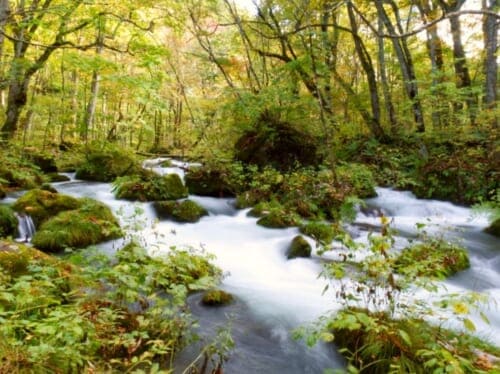
Situated in the fabulous forestry of the Hakone mountain range, Hakone Retreat promises a tranquil and luxurious end to a day spent traversing Tokyo-III, the most comfortable of conclusions. Offering a variety of room types, from suites to villas, housing solo travelers, couples, and families, this Northern European-inspired lodging combines a sincere appreciation for Japanese craft with an acknowledgement that modern tastes must be catered to. The resort is not merely located in the forest, for it has grown along with the nature that surrounds it, providing guests with accommodation and cuisine that is reverent to the splendors of the natural world. For this recommendation, I stayed at the Private Open-Air Hot Spring Suite Room [Yuragi] Suite 5.

- Hakone Retreat före
ESTABLISHMENT LODGING POINT_OF_INTEREST - 1286-116 Sengokuhara, Hakone, Ashigarashimo District, Kanagawa 250-0631, Japan
- ★★★★☆
A Room with the Greenest Views
As I descended the staircase of my open-air villa, I was immediately met with an almost panoramic view of lush greenery. My villa was tastefully decorated with not only wooden furnishings, but a wood stove that would undoubtedly provide the perfect backdrop for any wintry evening. Just outside the bedroom lay a private onsen bath, sheltered but open to the sounds and smells of the ecosystem in which it abides. With these open-air villas being removed from one another, privacy is guaranteed, meaning there is no obstruction between guests and the natural symphonies of Hakone’s mountain song. The room perfectly married the concept of an environmental escape with a provision of technological-age necessities, with the latter including a sublime sound system and a fully stocked refrigerator. I was able to decouple from the stresses of urban life, listening to some Shiro Sagisu instrumentals as I prepared a hand-drip coffee, the fire crackling all the while.
Nature’s Plate: Dining at Hyoseki
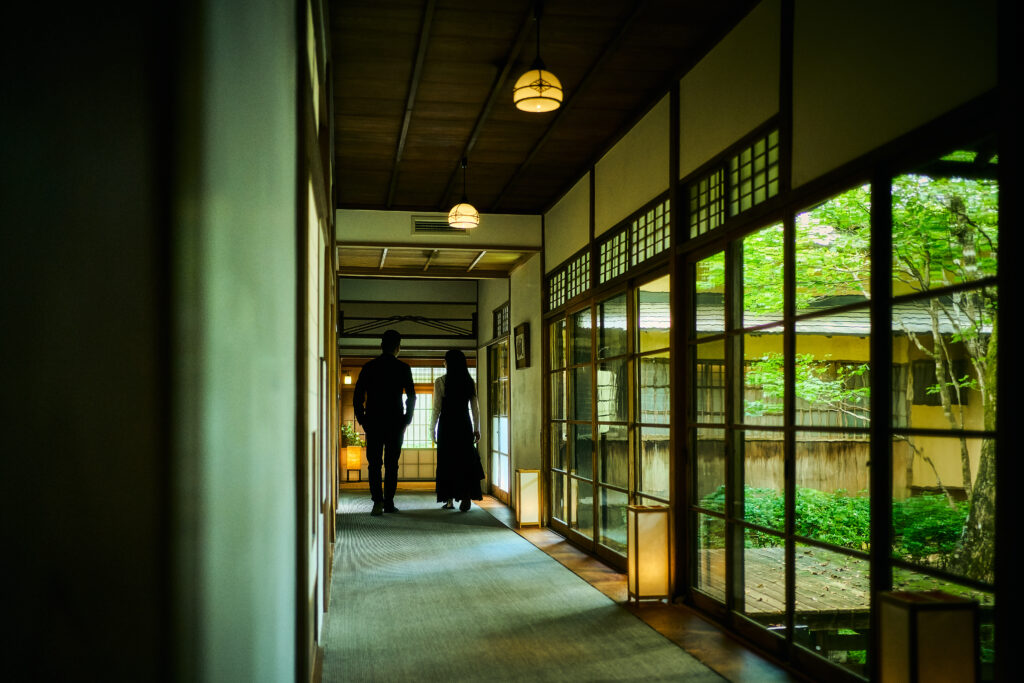
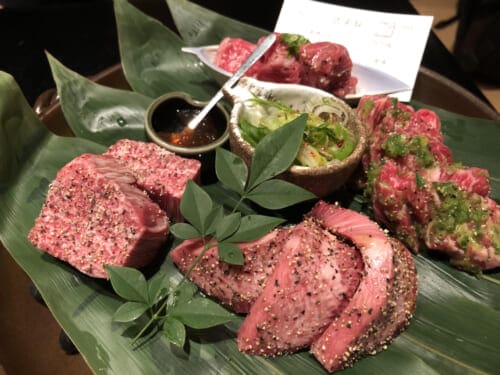
The Hakone Retreat clearly prides itself on a tethering to the nature and history that envelop it. This is epitomized during the evening dining experience at on-site Hyoseki, a traditional Japanese restaurant that is situated in an elegantly maintained inn. With views of a Japanese garden, guests are offered a taste of the seasons, with the locally sourced kaiseki (traditional, multi-course meal) filling the palate with a plethora of flavors. Each course is perfectly presented and explained, accompanied by an equally impressive drinks selection. Like a fine-tuned piano, the prioritization of precision is not lost on the expert staff at Hyoseki.
- Hyoseki
ESTABLISHMENT FOOD POINT_OF_INTEREST - 1286-116 Sengokuhara, Hakone, Ashigarashimo District, Kanagawa 250-0631, Japan
- ★★★★☆
This attention to detail continues into the morning’s offerings, with a traditional ryokan-style breakfast being provided. With both dinner and breakfast being meticulously prepared, this diversity of flavor is sure to both replenish and reinvigorate a guest for the day to come, and provide an exquisite bookend to a terrific pilgrimage to Tokyo-III.


No Comments yet!