Every three years, over a million visitors from around the world make their way to the quiet islands of the Seto Inland Sea, transforming it into one of Japan’s most extraordinary artistic stages. This is the magic of the Setouchi Triennale, an event that not only celebrates art but also contributes to the cultural rediscovery of the islands, blending creativity and tradition and breathing new life into these charming places.
Art that Revitalizes the Land
Our journey to discover the Triennale begins early, in true Japanese style. After a night spent on the train, we arrived at Takamatsu Port, welcomed by its lively atmosphere, the starting point for our adventure. Before boarding, we stopped by the information office to gather details about our route and pick up some exclusive goodies. A small taste of local hospitality. From this very first encounter with the locals, we can immediately sense the excitement surrounding the Setouchi Triennale. It’s much more than just an art exhibition: it’s a bridge between past and future, between the charm of the landscape and contemporary creativity.

Located in one of Japan’s most picturesque regions, the Triennale has a profound impact not only on the artistic scene but also on the local economy. Through installations and performances, a special bond is created between local communities, visitors, and artists, fostering an ongoing dialogue between tradition and innovation.
Founded in 2010 to counter the population decline of the islands, the Setouchi Triennale has established itself as a symbol of cultural revival. Every three years, world-renowned artists transform these places into open-air galleries, offering new perspectives on the islands and their identity. Here, art is not merely something to be observed; it becomes part of the landscape and daily life.
The Islands and Sessions of the Setouchi Triennale
Spread across 12 islands and several coastal cities, the Setouchi Triennale unfolds over eight months and three seasonal sessions: spring (March–April), summer (July–September), and fall (October–November). Each season introduces new works, some temporary and others permanent, making every visit a truly special experience.

What makes this event truly special is the exclusive access it offers to islands that are usually off-limits, giving visitors the chance to explore hidden corners of Japan. Naoshima, Teshima, Megijima, Ogijima, Shodoshima, Oshima, and Inujima are among the destinations accessible during all three sessions. Other islands open at specific times: in spring, the Seto Ohashi Bridge area; in summer, Shido, Tsuda, and Hiketa; and in fall, Honjima, Takamishima, Awashima, Ibukijima, and the Utazu area.
Equipped with our Art Setouchi Passport, a multi-entry ticket that makes visiting the art sites easier, we begin our journey. The ferries become our faithful travel companions, carrying us through a route of artworks and breathtaking scenery.
Art and Landscape: The Perfect Union
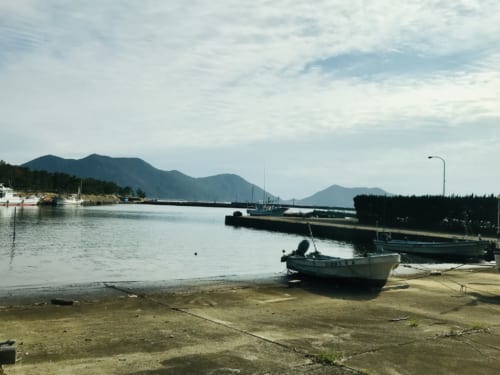
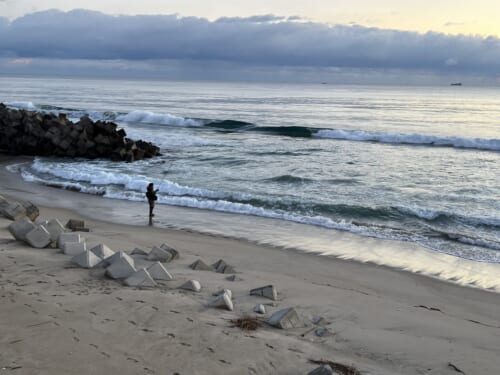
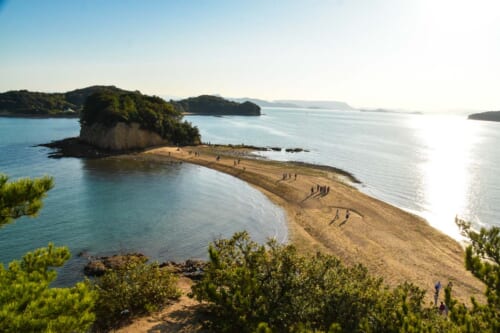
The Triennale’s artworks are not confined within gallery walls but interact with the environment, creating a dialogue between art and nature. The Seto Inland Sea, nestled between three of Japan’s four main islands, is renowned for its beauty: calm waters, sandy beaches, and a mild climate. However, during the 1960s, industrialization left a deep mark on the area, damaging its ecosystem. Today, thanks to art, places like Naoshima are rediscovering their natural beauty, transforming into symbols of renewal and sustainability.
 Naoshima
LOCALITY POLITICAL- Naoshima, Kagawa District, Kagawa 761-3110, Japan
- ☆☆☆☆☆
Each island has its own soul, preserving traditions that have endured over time. On Shodoshima, spectacular landscapes blend with olive oil production, while Teshima enchants with its forests and immersive installations. Here, art is not just decoration; it becomes an experience, a way to rediscover the history and present of these places.
- Shōdo Island
ESTABLISHMENT NATURAL_FEATURE - Shōdo Island, Shozu District, Kagawa, Japan
- ★★★★☆
- Teshima
ESTABLISHMENT NATURAL_FEATURE - Teshima, Tonosho, Shozu District, Kagawa, Japan
- ★★★★☆
Between History and Creativity: Hopping from Island to Island
Each of these islands offers a distinctive perspective on the Setouchi Triennale, but it’s the journey between them that makes the experience truly extraordinary. On Naoshima, the beating heart of the event, you’ll find the Benesse Art Site and the Chichu Art Museum, along with Yayoi Kusama’s iconic pumpkins. Megijima, the island of demons, is steeped in Japanese folklore, while on Oshima, art becomes memory: once home to a leprosy sanatorium, the island tells a moving story through installations that invite deep reflection.
- Ōshima Island
ESTABLISHMENT NATURAL_FEATURE - Ōshima Island, Oshima, Tokyo, Japan
- ★★★★☆
- Megijima
ESTABLISHMENT NATURAL_FEATURE - Megijima, Megicho, Takamatsu, Kagawa 760-0092, Japan
- ★★★★☆
On Ogijima, Jaume Plensa’s Ogijima’s Soul welcomes visitors with a structure made of characters from eight different languages. Meanwhile, on Teshima, Les Archives du Cœur by Christian Boltanski immerses visitors in the sound of strangers’ heartbeats, creating an invisible yet powerful connection between art and life.
- Ogijima Island
ESTABLISHMENT NATURAL_FEATURE - Ogijima Island, Ogicho, Takamatsu, Kagawa 760-0091, Japan
- ★★★★☆
A Lasting Cultural and Social Impact
The Triennale is not just an art event; it’s a catalyst for transformation on the islands. Once remote and rarely visited, these places are now witnessing the opening of new facilities, cafés, and accommodation. As local communities find new opportunities to share their culture, cultural tourism blends with daily life, creating a harmonious fusion of innovation and tradition.
Visitors to these islands are not only seeking art but also a slower, more mindful lifestyle in harmony with nature. The Triennale is proof that creativity can drive economic growth, preserve culture, and build meaningful connections among people from around the world.
How to Get There
From Tokyo, the most convenient way to reach the Seto Inland Sea is by Shinkansen to Okayama, then a local train to either Takamatsu or Uno Port. A fascinating alternative, the one we chose, is the Seto Sunrise, one of the few remaining overnight trains in Japan, which connects Tokyo directly to Takamatsu. Ferries depart from the ports of Takamatsu and Uno, and it’s advisable to check the schedules in advance. For accommodation, the best options are Naoshima, Teshima, and Shodoshima, or using Takamatsu as a strategic base.
The Setouchi Triennale app helps navigate maps and schedules, making the experience smoother. Many art sites require an entrance ticket, but with the Art Setouchi Passport, admission is included in most cases.More information can be found on the official website.
The Setouchi Triennale is much more than an art festival; it’s a journey across breathtaking landscapes, striking installations, and meaningful connections with warm, local communities. Whether you’re an art enthusiast, a Japan lover, or simply a curious traveller, this journey offers a chance to discover a lesser-known side of the country. It’s a meeting point between past and future, creativity and memory, and an invitation to see the world from a fresh perspective.





No Comments yet!