Any visitor to Tokyo has likely seen one — a narrow storefront tucked between buildings, crates spilling over with greens and glossy fruit, each marked with handwritten price tags. Behind them, an aproned vendor adjusts a pyramid of eggplants with the care of a jeweler.
These are yaoya (八百屋), the neighborhood greengrocers that have anchored Tokyo’s streets for centuries, holding their ground against neon-lit supermarkets and hyper-efficient konbini. Sourcing directly from local farms, they give the community a way to taste the rhythm of the seasons. Step inside, and you’ll see why one vendor insists that a good yaoya doesn’t simply sell vegetables. They, ostensibly, sell a story, in edible form.
A Taste of the Past in the Present
The name yaoya has roots as colorful as the produce it sells. One story takes us back to the 17th century, when Edo (modern-day Tokyo) was alive with open-air markets. Back then, greengrocers who opened permanent shops became known as aomonoya, literally “green goods shops,” that softened into the name yaoya we know today. Another theory suggests that yao (八百, “eight hundred”) symbolized abundance, as these merchants once sold nearly everything under the sun.
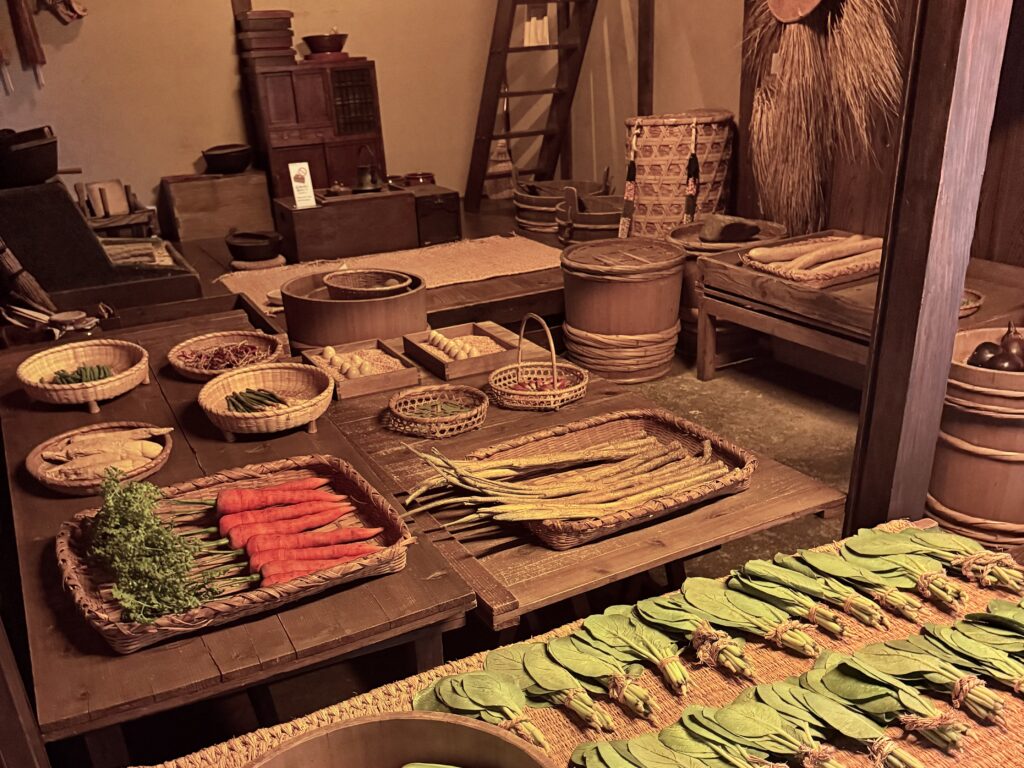
In those days, there was no cold storage or imports to fill gaps in the harvest seasons, so yaoya stocked according to nature’s clock. In Japan, this deep respect for shun (旬)—the exact moment an ingredient is at its peak—shaped the way people ate. One famous spring indulgence was the year’s first bonito (hatsugatsuo) in April, often paired with green onions and myoga ginger. The craving was so intense that Edo satirists joked a man might “pawn his wife or children” for it. Tasting the first produce of the season was a small thrill, not unlike the rush we feel today when jumping on the latest fashion trend or viral post.
This seasonal rhythm hasn’t disappeared with the fall of Edo markets. It’s simply quieter now, tucked into side streets and modest storefronts.
A Shopkeeper’s Kodawari: OKATTE in Taito
To see how the yaoya spirit thrives in modern Tokyo, I visited OKATTE, a cozy shop in Taitō Ward run by Rumiko Kuhara, a woman whose warmth and exacting standards seem to infuse every shelf. Inside, heirloom tomatoes glow in shades of sunset, herbs are tied like tiny bouquets, and edamame still cling to their leafy stems. But what truly sets OKATTE apart is kodawari (the Japanese concept for devotion to doing things exactly right).

For Kuhara, kodawari begins with how she sources her produce. Upon making orders, she periodically checks up on the farmers through casual phone calls. “It’s not just about what’s available,” she says. “It’s about what’s happening on the farm.” Indeed, if a grower runs out of sweet corn, they might suggest a neighbor who has stock, putting community care above competition.
This spirit is reflected in OKATTE’s incorporation of three conceptual mechanisms:
- Osusume (おすすめ; recommendations) — Giving personal recommendations, each enriched with the product’s story and quirks, gathered through Kuhara’s ongoing conversations with farmers and customers.
- Shishoku (試食; sampling) — Offering free tastings that invite curiosity, spark conversations on local ways of eating, and help customers discover ingredients they might otherwise overlook.
- Tabegoro (食べごろ; peak tasting season) — Ensuring the best quality produce makes it to the shelves by sourcing from farmers who harvest at peak ripeness, even if it risks overripening.
Kuhara’s dedication extends to choosing growers who share her values, from young farmers tending their corn with care to families passing down traditional seeds. She passes their stories along to customers, bridging farm and table. One mother has been shopping here since her son was born. “I’m thankful to know that he’s practically grown up on our greens,” Kuhara says with a smile.
Top chefs are among her regulars too, drawn by produce unavailable in supermarkets. At OKATTE, customers can sample rare produce — like Tosa buntan from Kochi Prefecture, traditional Edo Senju green onions, and edible ground cherries — that are each introduced with the story of its region and the voice of its growers. It’s this deep trust, built on kodawari, that keeps everyone from pregnant mothers to culinary professionals coming back.
Beyond Sales: OKATTE’s Role in Community
OKATTE is more than a greengrocer. It’s where the harvest travels straight from field to plate. In a nearby renovated kominka, the shop serves lunch every Wednesday, Thursday, and Friday, offering seasonal set meals and fresh-pressed juices that let each ingredient shine at its peak. Here, every fruit and vegetable is handpicked by a certified yasai sommelier (vegetable expert) and prepared with the same care it received on the farm.
When I visited, I ordered the Yasai Tappuri Higawari lunch set — a generous, vegetable-rich daily special for just 1,200 yen. That day’s menu was a celebration of color and texture: carrot takikomi gohan (rice cooked with vegetables), chilled white corn soup, stuffed kagura nanban peppers, chicken-and-bitter melon salad, and crisp korinki pumpkin dressed with tofu. Every bite tasted as though it had traveled directly from field to kitchen without losing a single note of flavor, and I couldn’t resist grabbing those very ingredients from the shop before leaving!
Even the shop’s name reflects its farm-to-table spirit. Okatte (お勝手), an old word for “kitchen,” evokes the warmth of home cooking, while its logo — a cooking pot and a vegetable — captures the shop’s mission to revive slower, more communal ways of enjoying food.
Why Visit Yaoya?
At the end of my visit to OKATTE, Kuhara shared a beautiful story about a traditional farming village experiencing depopulation where, when someone dies, the whole community stops work to attend the funeral. “Shipments come late when that happens,” she says, “We explain the circumstances to our customer and ask for their patience. And that’s okay. That’s life.” That bond runs both ways. When Kuhara once caught a cold, a farmer sent her homemade kumquat syrup. Such traditions can’t survive in supermarket culture, where schedules and numbers rule. This simple truth holds the soul of the yaoya tradition — food is never separate from the lives that produce and consume it.
 OKATTE
ESTABLISHMENT FOOD GROCERY_OR_SUPERMARKET- 1-chōme-11-9 Uenosakuragi, Taito City, Tokyo 110-0002, Japan
- ★★★★☆
In a world of global supply chains and instant delivery, yaoya like OKATTE remind us that food is more than a product, but a living connection between people, land, and season. So next time you spot a humble stall tucked into a side street, step inside. Ask for osusume, sample the shishoku, and take home some fresh produce. You won’t just be buying greens — you’ll be savoring centuries of Japanese city life, one seasonal story at a time.





This article beautifully captures the heart of Tokyos yaoya tradition. The vivid descriptions of the greengrocers and their dedication to sourcing seasonal, locally grown produce truly bring the experience to life. I especially loved learning about OKATTE and Rumiko Kuharas commitment to kodawari, fostering a deep connection between farmers and customers. It reminds us that food is more than just sustenance—its a story, a community, and a way to appreciate the rhythm of the seasons. A wonderful celebration of this timeless Japanese culture.grow a garden calculator
Thank you so much Robert. Your comments are very much appreciated. Take care. Paul McInnes