Nagasaki – picked as one of the 52 places to go for 2026, by The New York Times – is often introduced to the world through its history of seclusion-era traders and wartime tragedies. But walking Nagasaki’s streets in search of less-heralded corners reveals both a quieter, more reflective side — as well as a city alive at night. As I wander beyond the well-known memorials and well-trodden heritage sites, I start to see Nagasaki as a mosaic of cultural influences from historical European and Chinese neighborhoods — situated among Japanese shrines, hills and harbors. In about six hours of unhurried exploration (with some walking and short tram rides), I find secret panoramas and tucked-away landmarks that tell the city’s story in rich detail. This itinerary follows my path through a day in Nagasaki’s “other sides.”
Megane Bridge on a Sunny Morning
I start the day at Megane Bridge, known locally as Meganebashi, just as the morning sun glances off the Nakashima River. The stone arches and their reflection form perfect ovals, like a pair of eyeglasses, giving this 1634 bridge its nickname. As one of Japan’s oldest stone arch bridges, it stands as a beloved symbol of Nagasaki’s resilience. I join a few locals crossing its worn steps, pausing to watch koi fish ripple the calm river below. The tree-lined banks frame a scene out of old Japan, while teenagers gesticulate the bridge’s circular shapes in photos for social media. The bridge has seen fires and floods, yet it endures as a tangible link to the city’s multilayered past.

 Megane Bridge
ESTABLISHMENT POINT_OF_INTEREST TOURIST_ATTRACTION- 2 Uonomachi, Nagasaki, 850-0874, Japan
- ★★★★☆
Nagasaki City Hall Observation Deck
A short tram ride later, I slip into an elevator at city hall and ascend to a little-known perch above the city. The Nagasaki City Hall Observation Deck (atop the new prefectural office building) is a completely free public terrace offering panoramic views of the skyline. It feels almost like a secret as there are no crowds, just me and my company amid the potted elevated greenery.
Stepping out onto the open-air deck, I’m greeted by a breathtaking 360-degree cityscape. Below, Nagasaki’s harbor glitters and the hills undulate with tightly packed neighborhoods. In the distance I recognize the outline of Mount Inasa, which I will visit later. This semi-secret viewpoint provides a sense of the city’s layout, cradled by mountains and sea. The daylight lends clarity to every detail; from the white arc of Megami Bridge in the port to green slopes beyond. An ideal place to take in how Nagasaki’s history and present day merge in one sweeping vista.
- 長崎市役所展望フロア
ESTABLISHMENT POINT_OF_INTEREST TOURIST_ATTRACTION - Japan, 〒850-0874 Nagasaki, Uonomachi, 4−4番1号 長崎市役所 19階
- ★★★★☆
Suwa Shrine
Back at street level, I make my way to Suwa Shrine, Nagasaki’s guardian Shinto shrine since 1625. Approaching the shrine means climbing a monumental stone staircase that rises through a hillside forest; 200 steps, but worth it. Each step up carries me further from the city’s bustle and into a cocoon of tranquility. At the top, I catch my breath under the shadow of a towering torii gate. The shrine grounds are peaceful at midday and a few worshippers drift in and out.
Suwa Shrine is the city’s principal shrine, enshrining three protective deities, and it has long been a spiritual center for Nagasaki’s people. Every autumn, these very steps turn into grandstands for the Nagasaki Kunchi festival, a 370-year-old tradition designated as an Important Intangible Folk Cultural Property of Japan. I imagine the explosion of color and sound during kunchi — dragon dancers and floats bouncing on the stone steps where I now stand alone. From the shrine’s main hall, I gaze out over the city; the vista is humbler here, giving me a closer peek of downtown far below. In this quiet refuge, it’s clear how Nagasaki’s cultural heartbeat resides not only in its churches or monuments but also in this sacred, green enclave which is still cherished by locals.
- Suwa Shrine
ESTABLISHMENT PLACE_OF_WORSHIP POINT_OF_INTEREST - 18-15 Kaminishiyamamachi, Nagasaki, 850-0006, Japan
- ★★★★☆
Nagasaki Chinatown
Descending back into the city, I find myself enveloped by a burst of color and aroma in Nagasaki Shinchi Chinatown, one of Japan’s oldest Chinatowns. A Chinese-style gate welcomes me into a grid of narrow lanes. The atmosphere shifts dramatically: signboards in Mandarin, red lanterns strung overhead, and the mouthwatering scent of fried noodles and steamed buns filling the air.
Nagasaki’s Chinatown dates to the Edo period, when this port was one of the few places in Japan open to foreign trade. Chinese merchants from Fujian settled in the Shinchi district centuries ago, and their legacy lives on in the form of architecture, cuisine, and festivals. I stroll along the cross-shaped layout of the streets, passing vendors selling piping hot chanpon (the famous local noodle soup) and fluffy pork bao. I enter a local eatery and grab a bowl of chanpon loaded with seafood and pork, a recipe introduced by Chinese immigrants over a hundred years ago.

It’s the taste of the confluence of cultures that defines Nagasaki. Even outside the Lunar New Year season, the spirit of the Nagasaki Lantern Festival is palpable: shop windows display vibrant dragon motifs and some lanterns stay hung year-round in anticipation of the winter celebration that lights up these streets. In the afternoon light, Chinatown is alive with locals and curious visitors, all enjoying an enclave that is both authentically Chinese and uniquely Nagasaki.
- Nagasaki Shinchi Chinatown
ESTABLISHMENT POINT_OF_INTEREST TOURIST_ATTRACTION - 10-13 Shinchimachi, Nagasaki, 850-0842, Japan
- ★★★☆☆
Nagasaki Museum of History and Culture
With a fuller stomach and a closer contact with Nagasaki’s cosmopolitan soul, I head to the Nagasaki Museum of History and Culture. Housed in a modern building echoing traditional architecture, Rekibun (as it’s nicknamed) opened in 2005 on the former site of the Nagasaki Magistrate’s Office. Stepping inside is entering a time portal. The exhibits are thoughtfully divided into two realms: one dedicated to Nagasaki’s rich history of international exchange during Japan’s isolation era, and another centered on the old magistrate’s office. I wander through the Historical Zone, with Portuguese astrolabes, Chinese ceramics, and Dutch East India Company ledgers which are artifacts of the centuries when Nagasaki was Japan’s window to the world.
It’s striking to realize that while the rest of Japan slept, Nagasaki was awake with the hum of a spectrum of languages and philosophies. In the Magistrate’s Office Zone, I step into a full-scale reconstruction of an Edo-period courtroom. The wooden beams and tatami of the magistrate’s chambers are meticulously recreated. There are even scheduled reenactments in this historical courtroom, though I’m not lucky enough to catch one today. As I move between displays, I appreciate how accessible and engaging the museum is — clearly designed so all visitors can experience Nagasaki’s layered history firsthand. When I leave, I have a deeper understanding of the city and its trading past, but also a feel for the blend of cultures that still flavor Nagasaki’s streets.
- Nagasaki Museum of History & Culture
ESTABLISHMENT MUSEUM POINT_OF_INTEREST - 1-chōme-1-1 Tateyama, Nagasaki, 850-0007, Japan
- ★★★★☆
Mount Inasa at Night
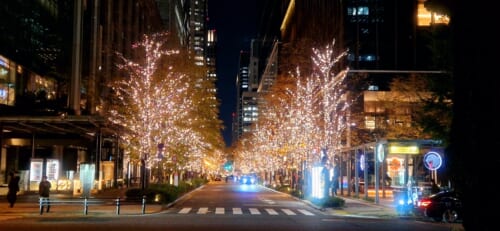
Evening descends, and with it comes Nagasaki’s most spectacular view. I make my way to the base of Mount Inasa and take a ropeway gondola up, watching the city’s lights flicker on below as dusk turns to darkness. Mount Inasa stands 333 meters tall on the city’s edge, and at its summit observatory I find a wraparound deck buzzing with hushed excitement. Couples, families, and solo travelers like me all lean on the railings, faces illuminated by the neon tapestry below. The night is clear and warm. I look down at Nagasaki where the entire bowl of the city is aglow, from the ship lights in the bay to the twinkle of cars threading through hills. The view is famously one of Japan’s “top three” nightscapes, and standing here, it’s so obvious why. The city looks like a sea of stars fallen to earth, hemmed in by the dark outline of mountains and the sheen of the ocean beyond. I can pick out familiar landmarks: the winding Nakashima River like a dark ribbon reflecting city lights, or the faintly lit outline of Suwa Shrine’s hill in the distance.
- Mt. Inasa Overlook
ESTABLISHMENT POINT_OF_INTEREST TOURIST_ATTRACTION - Japan, 〒852-8011 Nagasaki, Ōhamamachi, 364 稲佐山公園
- ★★★★☆
A Modern City Also Steeped in History
At this moment, Nagasaki feels both vast and intimate. A destination that has seen so much change, yet radiates a timeless beauty. From the quiet chatter around me I hear a local guide point out where the Dutch quarter once was, and elsewhere, a pair of students marvel at the foreign cruise ship docked like a lit-up hotel in the harbor. Standing atop Mount Inasa, I reflect on the day’s journey. In half a day I’ve traversed from riverside stone bridges to mountaintop panoramas, from the solemn steps of a Shinto shrine to the lantern-lit lanes of Chinatown. Nagasaki’s “other sides” are a collection of hidden viewpoints and secret spots that together paint a portrait of a city forever balancing its deep history with everyday life. As the wind picks up gently on the observation deck, I pull out my camera for one last shot of the night scene, knowing no photo can truly capture the atmosphere. In Nagasaki, it seems, the more closely you look, the more layers of its story you uncover — and I’ve only just started to scratch the surface.
Sponsored by NAGASAKI CITY.





No Comments yet!