Eating in a foreign country can be a bit of an adventure if you don’t speak the language. And Japan is no exception. Thanks to Japan’s three alphabets (kanji, hiragana, and katakana) understanding menus can be a real challenge, which can be particularly tricky for vegans and vegetarians in Japan. With our tips, however, even non-meat eaters can embark on a culinary journey through the Land of the Rising Sun.
In addition to a list of vegan and vegetarian restaurants in Japan, we give you helpful and practical tips on what to look out for so that your trip doesn’t become a culinary disappointment.
Is it Easy Being Vegan or Vegetarian in Japan?
Although the selection of vegan and vegetarian foods and restaurants in Japan, especially in Tokyo, has increased in recent years, non-meat eaters continue to face regular challenges. Be it the ingredient lists of supposedly vegetarian foods or the lack of understanding of restaurant employees.
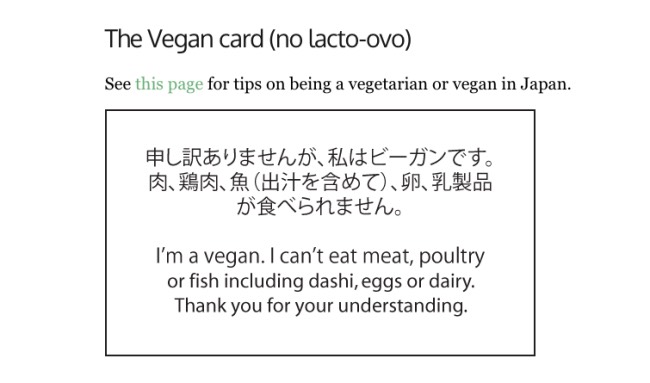
Good preparation for vegans and vegetarians, then, is essential for their trip to Japan. The various cards from Just Hungry can be helpful in this regard. They contain explanations in Japanese and English, making it easier for you to explain your diet to others even without language skills.
Pay Attention to the Ingredient Lists
While the above-mentioned cards can certainly help you in restaurants or cafés, things are different when you’re shopping at a convenience store or supermarket, for example. Here, you should take a closer look at the ingredients list, as they often contain unpleasant surprises.
These are the most common animal additives you will find in food in Japan:
Dashi
Dashi (出汁, だし) is a fish broth found in numerous Japanese dishes. From miso soup and pickled vegetables to dipping sauces for soba — the broth is an integral part of Japanese cuisine. Dashi can also be found in some dishes such as tamagoyaki.
An alternative to dashi is kombu dashi (昆布だし), which is made from dried seaweed or kombu. Be careful, however, as kombu dashi is sometimes also diluted with bonito (fish flakes).
Gelatin
Gelatin (ゼラチン) is found in most Japanese desserts and baked goods. Puddings, regular yogurt, and even ready-made meals with tomato sauces can contain this gelling agent. Gelatin is also often used to thicken the popular egg salad sandwich tamagosando.
Pay particular attention to the ingredients when purchasing desserts and yogurts (including yogurt drinks) in convenience stores, and when buying cakes or tarts in pastry shops. Seasonal drinks and yogurt with cereal at Starbucks can also contain gelatin. It’s best to inquire about the ingredients beforehand.
Animal Extracts
If you study the ingredient lists of ready-made products, you will often come across various animal extracts. The most common are chicken extract チキンエキス, beef extract ビーフエキス, and pork extract ポークエキス.
Shirako
Another animal ingredient often found in baked goods or ramen is shirako 白子. This is fish milt or sperm, which is used to extend the shelf life of the food.
Plant-Based is not the Same as Vegan
Especially in recent years, the selection of so-called plant-based foods and dishes in Japanese supermarkets and convenience stores has increased. However, plant-based in Japan does not necessarily mean that the food is vegan or vegetarian. It simply means that the main component, such as a hamburger, comes from plant-based products. Sauces and condiments may still contain animal products such as various extracts or gelatin. So don’t be confused by the term plant-based and, to be absolutely sure, look for the vegan label or study the list of ingredients.
Helpful Apps for Vegans and Vegetarians in Japan
Even though the use of animal products is very common in Japan, you don’t have to miss out on a restaurant visit as a vegan or vegetarian during your trip. A number of helpful apps and websites can help you find vegan-friendly restaurants in Japan.
Happy Cow
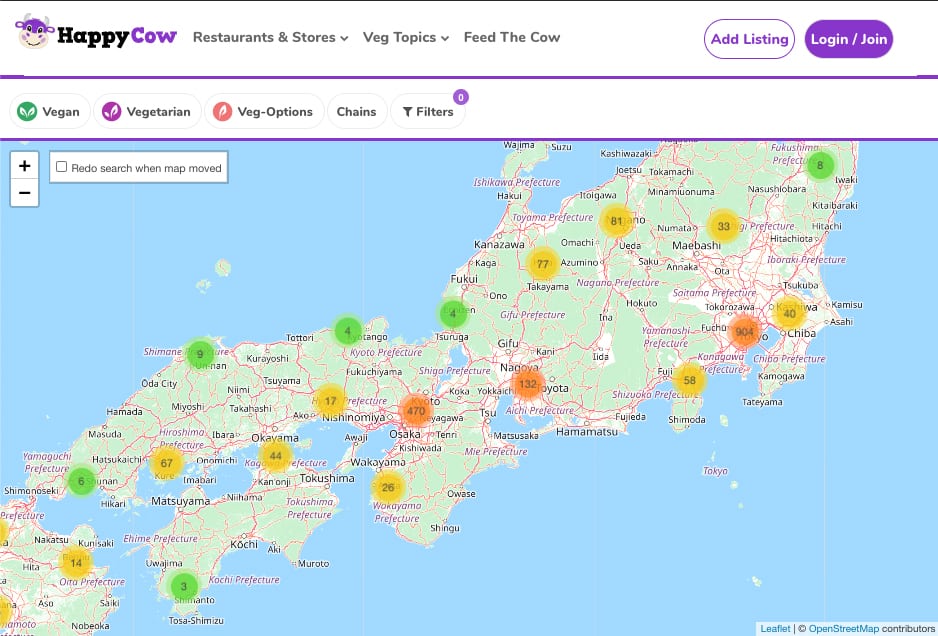
The most popular travel app among vegans and vegetarians is Happy Cow (Android / iOS). Download the app and find animal-free restaurants across Japan. Whether in Tokyo, Osaka, or Hiroshima!
Bento.com
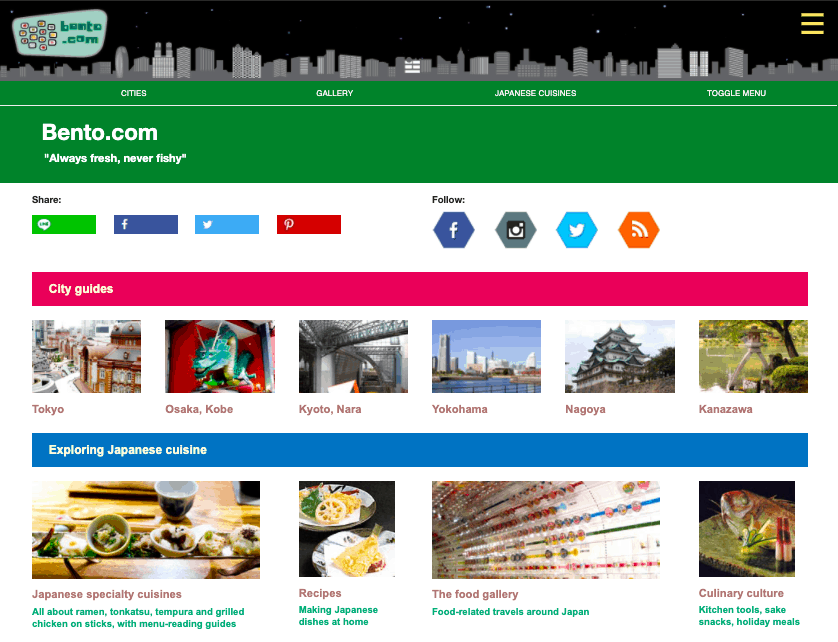
If you don’t want to download an app, you can check out the local restaurant guide Bento.com. For over 25 years, the website has offered a long list of restaurants in various parts of Japan, which can be filtered by vegan and vegetarian options. You’ll find a wealth of other useful information here.
Chain Restaurants with Vegan and Vegetarian Options
Some chain restaurants in Japan have also embraced the trend toward plant-based diets and offer vegan and vegetarian-friendly options.
MOS Burger
The Japanese burger restaurant MOS Burger offers a vegan-friendly option with its Green Burger. Neither the burger bun nor the sauce, which comes in a separate container, contain any animal products.
Vegetarians can also choose from various soy burgers, although caution is advised. Not only is the cheese considered an animal product, but animal additives can also be hidden in the sauces, rendering the burgers unsuitable.
Freshness Burger
Like MOS Burger, the Japanese chain Freshness Burger also offers its customers the option of serving all burgers with a plant-based soy patty free of charge. However, animal-based additives may be hidden in the sauces, so it’s best to check the ingredient lists beforehand.
Coco Ichibanya
The Japanese curry chain Coco Ichibanya also offers options for its vegetarian customers. However, since its vegetarian curry may contain traces of milk, it is not specifically labeled as vegan. A detailed overview can be found online at the curry chain’s allergen list.
Vegan Restaurants in Tokyo
As mentioned above the selection of vegan and vegetarian restaurants in Tokyo has increased in recent years. The selection ranges from burger restaurants and izakaya to ramen restaurants like the popular T’s Tan Tan, which also offers a wide selection of other dishes at its main location in Jiyugaoka.


If you’re curious, we definitely recommend trying some of these other culinary highlights. These include the newly opened vegan Izakaya Nowhere which is within walking distance of the Tokyo Skytree, and the vegan restaurant chain Ain Soph, which has stores in Shinjuku, Ginza, and Ikebukuro. For an entertaining evening with Mexican food, we also recommend The Pink Cow restaurant in Akasaka.
 Vegan Izakaya Nowhere
ESTABLISHMENT FOOD POINT_OF_INTEREST- 1-chōme-8-2 Mukōjima, Sumida City, Tokyo 131-0033, Japan
- ★★★★☆
- Tokyo Skytree
ESTABLISHMENT POINT_OF_INTEREST TOURIST_ATTRACTION - 1-chōme-1-2 Oshiage, Sumida City, Tokyo 131-0045, Japan
- ★★★★☆
Shojin Ryori: Traditional Vegetarian Cuisine
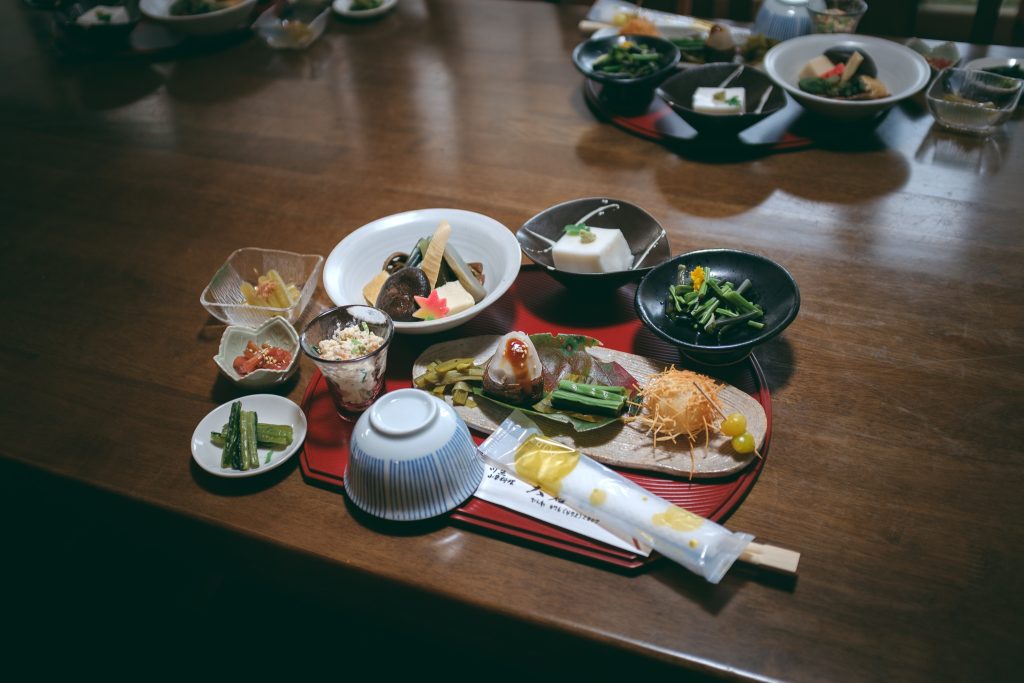
For vegetarians, there is another option besides the restaurants mentioned above. There are also traditional shojin ryori (精進料理), restaurants which is essentially traditional Buddhist food that avoids meat and fish. Instead, various vegetables, mushrooms, and soy products are served in all sorts of variations, seasoned with miso and soy sauce. Strong-smelling foods like onions or garlic are also avoided in shojin ryori.
We particularly recommend trying Buddhist cuisine in conjunction with an overnight stay at a temple, such as Koyasan in Wakayama Prefecture. Or you can look for alternative temple accommodation in other parts of Japan.
Traveling in Japan as a vegan or vegetarian may not always be easy, but if you follow our tips, pay attention to ingredient lists, and consult useful apps, you too can enjoy a culinary adventure.
Based on an original article from 2016, written by Lauren Shannon.









No Comments yet!