This is my first time visiting Awaji, an island that occupies a singular place in Japan’s cultural imagination. Sitting between Honshu and Shikoku, just across the Akashi Kaikyo Bridge from Kobe, it is both close to Japan’s urban core and strangely peripheral. I came here drawn by historical and contemporary narratives, particularly the long-term regional revitalization project of the Pasona Group, which, since 2008, has been quietly reshaping the island through architecture, hospitality, agriculture, and wellness. On the ground, this vision translates into thoughtfully designed spaces and meals crafted from local ingredients.
But Awaji’s identity extends far beyond modern development. According to Japan’s founding myths recorded in the Kojiki and Nihon Shoki, this is the very first island created by the gods Izanagi and Izanami, the starting point of the Japanese archipelago itself. Historically, Awaji also held a vital role as one of the Miketsukuni, the lands that supplied the Imperial Court with food, prized for its seafood, salt production, and fertile soil.
This journey is, in a way, an exploration, a learning experience, and a discovery of the archipelago’s mythical origins.
Izanagi Shrine and the Origins of Japan
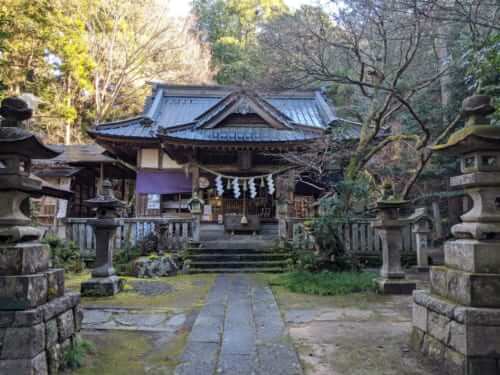
Before encountering Awaji’s contemporary expressions of wellness and design, I feel compelled to begin where everything is said to have started. A short drive inland brings me to Izanagi Shrine, one of Japan’s oldest and most symbolically charged Shinto sites. After creating the Japanese islands, the divine couple Izanagi and Izanami descended upon Awaji, and it is here that Izanagi is believed to have spent his final years. The shrine stands on ground infused with that origin story, making it a point of beginning.

Designated as the ichinomiya, the highest-ranking shrine of the former Awaji Province, Izanagi Shrine carries a quiet authority. There is no overt grandeur in its architecture. Instead, the approach unfolds gently, framed by tall trees and gravel paths that soften the transition from the everyday to the sacred. The atmosphere is calm, almost restrained.
At the heart of the shrine grounds stands its most arresting presence: the Husband and Wife Tree. This immense camphor tree, estimated to be around 900 years old, splits into two towering trunks that rise side by side. Designated as a natural monument of Hyogo Prefecture, it is revered as a sacred tree housing the spirits of Izanagi and Izanami themselves. Visitors gather here instinctively. Some bow, some press their hands together in prayer, others simply stand in silence. The wishes offered are deeply human (fertility, uncomplicated childbirth, harmonious relationships), reminders that ancient myth continues to shape contemporary longing.
Walking through the grounds, I sense how Shinto’s animistic worldview remains tangible here. The trees, the stones, the quiet spaces between buildings all feel equally charged. Visiting Izanagi Shrine reframes my understanding of Awaji Island. Before it became a site of contemporary revitalization, before it was crossed by bridges and development plans, it existed as a place of origin.
 Izanagi Shrine
TOURIST ATTRACTION- 740 Taga, Awaji, Hyogo 656-1521, Japan
- ★★★★☆
Finding Stillness and Spirit in Awaji Island
When you drive around the island, an iconic building immediately catches your eye. Nestled amidst the island’s rolling green hills, Zenbo Seinei, Awaji’s Zen retreat center designed by globally acclaimed architect Shigeru Ban, invites you to breathe: a long Japanese cedar frame stretches for nearly a hundred meters, its clean lines blending seamlessly with the surrounding landscape. Ban’s sensitivity to materials and landscape transforms this space into a haven of peace and elevation where light and wind combine with contemplation.

At Zenbo Seinei, the focus is intentional stillness. I joined a guided meditation session on the open deck, where the horizon unfurled in all directions and every breath seemed to extend the view. The place is clearly conducive to introspection, like an invitation to reconnect with oneself, with one’s inner rhythm, with the forgotten calm of urban routine.
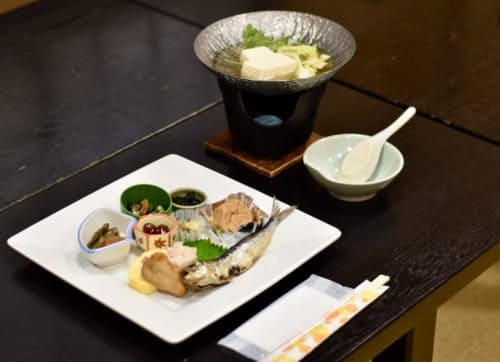
Meals here are part of the mindfulness journey. Zenbo cuisine, plant-forward and rooted in traditional Japanese fermentation techniques, arrives as a series of simple yet deeply satisfying dishes. Nourished by seasonal produce, fermented condiments like rich miso and unfiltered soy sauce, and mindfully prepared grains, I found the food to be both grounding and luminous.

- Zenbo Seinei
CAFE ESTABLISHMENT FOOD - Japan, 〒656-2301 Hyogo, Awaji, Kusumoto, 字場中2594-5
- ★★★★☆
I then traveled down toward the coast to Senshin Waho, another of Awaji’s signature retreats. Set closer to the sea and designed with a hushed elegance, Senshin Waho offers a contrasting form of serenity: rooms open onto framed views of waves and sky, while its gardens encourage a meditative gaze. Here, hot springs sourced from the island’s thermal veins soothe, and a restaurant emphasizes fermentation and seasonal bounty, dishes crafted with intention and served at a pace that encourages mindfulness. It’s a place to linger, to watch sunlight pool across tatami, and to discover how quiet tastes and textures can deepen your travel experience.
- Senshin Waho
LODGING - Nojimahikinoura, Awaji, Hyogo 656-1721, Japan
- ☆☆☆☆☆
Awaji Island reveals itself through the accumulation of myths, gestures, flavors, and pauses. What begins as a journey drawn by contemporary revitalization gradually deepens into something more elemental: a return to both personal and historical roots. From the foundational narrative embodied by Izanagi Shrine to the cultivated stillness of Zenbo Seinei and Senshin Waho, the island constantly invites contemplation, slowing down, listening, and recognizing how landscape and belief, nourishment and ritual, are intertwined.
The island’s ongoing transformation suggests a carefully negotiated future, one where wellness architecture, fermentation-based cuisine, pop culture attractions, and agricultural heritage coexist without erasing one another. The island’s strength lies precisely in this balance, its ability to host spirituality without dogma, and innovation without rupture.
There is also more to Awaji waiting beyond these first encounters: coastal fishing towns shaped by tides and seasons, onion fields that have become emblematic of local identity, puppet theatre traditions that predate modern entertainment, and evolving artistic initiatives that continue to test how regional Japan can renew itself. Awaji, then, offers a framework, one where beginnings are continuously reactivated.
Cover photo: Pasona





No Comments yet!