In Japan, autumn doesn’t show off with big events and parties (except Halloween, of course); it often hums softly through one’s seikatsu, or everyday moments. It appears and is encapsulated in centuries-old customs of layered clothes, the aroma of roasted sweet potatoes, and the glow of reading lamps under twilight.
Whether you’re living here or simply passing through, try weaving a touch of Japanese autumn into your own daily routines.
- Kasanegi: Layered Fashion for Changing Days
- Shichi-go-san: Celebrating Growth and Good Fortune
- Takikomi Gohan: The Fragrance of Autumn in a Rice Cooker
- Dokusho no Aki: Reading Season
- Momijigari: Everyday Foliage Hunting
- Tsukimi Dango: Sweets for Moon Viewing
- Yakiimo: Roasted Sweet Potatoes, the Soul of Autumn
- Kiku Matsuri: Chrysanthemum Festivals
Kasanegi: Layered Fashion for Changing Days
As temperatures fluctuate between warm afternoons and chilly mornings, kasanegi (layering clothing) becomes both practical and stylish. The concept dates back to the awase (lined kimono) tradition of medieval Japan, when silk layers were added in color combinations that reflected the shifting hues of the season.
In modern fashion, layering brings that same depth and adaptability. Adopt the kasanegi look by simply adding an extra white t-shirt under a regular short-sleeve shirt. You can also try mixing textures, such as a light shirt under a soft cardigan or a blazer over a knit. For specific ideas, check out the styling advice by UNIQLO.
Shichi-go-san: Celebrating Growth and Good Fortune
Every November, families across Japan celebrate shichi-go-san, literally translated as “Seven-Five-Three.” On or around November 15, children aged three, five, and seven dress in kimono and visit shrines to pray for good health and growth.

The custom originated as a court ritual during the Heian period (794–1185), when infant mortality was high and each milestone was highly valued. By the Edo period (1603-1868), it had spread among samurai and merchants as a family custom, carried into homes to this day.
If you have little ones in Japan, consider joining in. Spend some extra time with your children, or rent a kimono for a day of photos and celebration. You might also consider visiting a local shrine on a taitan or “lucky day” on the lunar calendar in order to share in the full wonder of this gentle tradition.
Takikomi Gohan: The Fragrance of Autumn in a Rice Cooker
Nothing says comfort like the earthy aroma of takikomi gohan, seasoned rice cooked with autumn ingredients. Matsutake mushrooms, prized for their deep fragrance, are the star of the season, but any fall produce like chestnuts and sweet potatoes will do.
Try making a small batch at home. Rinse the rice, mix in dashi, soy sauce, and your choice of toppings, then cook as usual. The gentle steam that rises when you lift the lid feels like the scent of autumn itself.
Dokusho no Aki: Reading Season
As nights grow longer, Japan celebrates dokusho no aki or the “autumn for reading.” The phrase originated from a poem by the Chinese writer Han Yu and was later quoted by the much-loved Japanese novelist Natsume Soseki in Sanshiro, giving rise to this seasonal custom.
This year, “Reading Week” runs from October 27 to November 9, beginning on Reading Day and overlapping with Culture Day on November 3. During this period, bookstores, libraries, and schools host reading events and displays celebrating the season.
For you, it might simply mean curling up with a book, a blanket, and a cup of tea after work. That extra hour of twilight is the perfect invitation to let your mind wander somewhere new.
Momijigari: Everyday Foliage Hunting
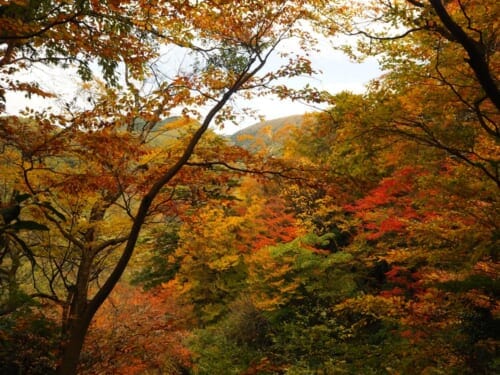
Momijigari literally means “autumn leaf hunting,” though there is no chasing involved and only the quiet appreciation of colorful foliage. The custom began among Heian aristocrats who composed poems under scarlet maple trees, which later spread to the public during the Edo period.
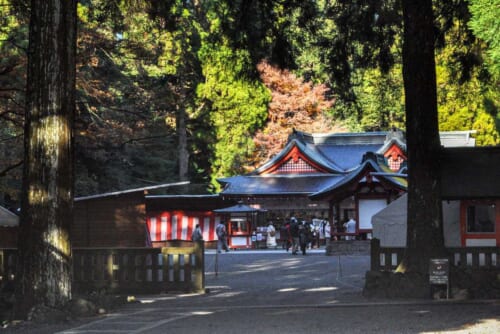
Well-known viewing spots include Nikko in Tochigi, Mount Takao in Tokyo, Arashiyama in Kyoto, and the Oirase Gorge in Aomori. But momiji can be found much closer to home: a park on your commute, ivy turning red on a wall, or maple leaves rustling right outside your window.

As the name suggests, you can make a gentle “hunt” of it, noticing small moments of beauty hidden in your daily paths.
Tsukimi Dango: Sweets for Moon Viewing
Tsukimi, or “moon viewing,” is a cherished tradition that celebrates the harvest moon of mid-autumn. Families and friends gather to admire its gentle glow while sharing tsukimi dango which are small white dumplings that express gratitude for the season’s bounty.
Making them is wonderfully simple: mix rice flour (shiratamako or dangoko) with water, roll into small balls, boil, and cool. Serve with a drizzle of maple syrup, a dusting of sweet kinako powder, or a spoonful of red bean paste. Enjoy them by the window, or take them along on a quiet evening walk in moonlit parks.
While Jugoya is the traditional time for moon viewing, the entire autumn season is celebrated for its luminous harvest moon in Japanese aesthetics, immortalized by artists like Hiroshige and Buson.
Yakiimo: Roasted Sweet Potatoes, the Soul of Autumn
The unmistakable scent of yakiimo, or roasted sweet potatoes, from a grocery store oven or a passing truck marks the arrival of Japan’s coziest caramelized snack. The onomatopoeia “hoku-hoku” describes their texture perfectly — warm, fluffy, and a little crumbly, filling your mouth with gentle warmth.
To make them at home, wrap washed sweet potatoes in foil and bake in a toaster oven at 800–850W for about 30 minutes, flipping halfway through, and let them rest at room temperature before unwrapping.
Pair them with green tea, and you have recreated one of Japan’s simplest autumn pleasures.
Kiku Matsuri: Chrysanthemum Festivals
No Japanese autumn is complete without kiku (chrysanthemums) which is the flower of longevity and imperial grace. These blooms take center stage from October through November at kiku matsuri (chrysanthemum festivals) and kikka-ten (chrysanthemum exhibitions) across the country.
In Tokyo, highlights include:
- Asakusa Temple Kiku Kuyō-e (Oct 18, 2025): Visitors offer a chrysanthemum and receive a blessed one in return, said to ward off illness and misfortune.
- Tokyo Metropolitan Chrysanthemum Exhibition, Hibiya Park (Oct 31–Nov 9, 2025): Thousands of sculpted blooms displayed in bonsai and cascade forms.
- Meiji Jingu Kikkaten (Oct 25–Nov 23, 2025): The shrine showcases a vast array of kiku, from rare specimens to bonsai versions.
 Sensō-ji
ESTABLISHMENT PLACE_OF_WORSHIP POINT_OF_INTEREST- 2-chōme-3-1 Asakusa, Taito City, Tokyo 111-0032, Japan
- ★★★★☆
- Hibiya Park
ESTABLISHMENT - 1-6 Hibiyakōen, Chiyoda City, Tokyo 100-0012, Japan
- ★★★★☆
- Meiji Jingu
ESTABLISHMENT PLACE_OF_WORSHIP POINT_OF_INTEREST - 1-1 Yoyogikamizonochō, Shibuya, Tokyo 151-8557, Japan
- ★★★★☆
Even outside these events, you’ll find chrysanthemums in flower shops and supermarkets, offering an easy way to bring a touch of the season home.
Autumn in Japan doesn’t ask for grand plans or distant travel. Consider adopting some of these ordinary customs that give the season its quiet charms.






No Comments yet!