Permanently moored in Odaiba (near the site of the now closed, ship-shaped Museum of Maritime Science) the retired icebreaker Soya has lived several lives. Built before WWII, repurposed during it, and later sent to Antarctica, the ship’s long career mirrors some of the most dramatic changes in Japanese history. Now preserved as a museum ship, Soya offers visitors an easy but rewarding stop, where decades of history unfold within a short, walkable visit along Tokyo Bay.
From Launch to Reassignment
The Soya was first laid down in 1936 at the Matsuo Shipyard in Nagasaki for the Soviet Union, under the name Volochaevets, as part of a broader payment arrangement tied to Japan’s construction of the South Manchuria Railway. Designed as a sturdy, ice-capable cargo vessel suitable for Arctic routes, the ship featured a reinforced hull rather than the bow of a true icebreaker. As Japan–Soviet relations deteriorated in the late 1930s, however, the vessel was never delivered to Moscow. Instead, she was launched domestically in 1938 under the name Chiryo Maru, which translates as “Territorial Domain” or “Land Jurisdiction.”
That being said, a year later, the Imperial Japanese Navy requisitioned the ship for national service, renaming her Soya in 1940. The new name was drawn from the Soya Strait, a strategic body of water separating Hokkaido from the Japanese-controlled southern portion of Sakhalin Island, then known as Karafuto Prefecture. It was in these cold, northern waters that Soya would spend much of WWII, transporting supplies and supporting patrol and escort operations along Japan’s northern frontier.

What’s remarkable is not what she did, but what she survived. Soya was attacked multiple times during her years of service and, in one particularly famous incident in 1943, escaped unharmed when a torpedo from an American submarine reportedly struck her hull but failed to detonate. The damage was limited enough that she remained operational, earning the Soya its reputation as a “lucky ship.”
Still afloat after WWII, unlike roughly half of Japan’s auxiliary and support vessels, Soya was reassigned to help repatriate Japanese civilians and soldiers from the empire’s former colonies and occupied territories. She later entered service with the Maritime Safety Agency, the predecessor of today’s Japan Coast Guard, where she once again patrolled the icy waters around Hokkaido and supplied remote lighthouses in the north.
The Antarctic Years
In the mid-1950s, Japan was still rebuilding itself after the war and so decided to participate in the International Geophysical Year (1957-58), a global scientific initiative that brought dozens of countries together to study the Earth’s systems through coordinated, peaceful research. Japan set its sights on Antarctica, drawn by both its scientific importance and its political neutrality. The only problem was, at that time, Tokyo did not have a purpose-built Antarctic research vessel. And so, it turned to the best ship it already had: the Soya, which still boasted an ice-resistant hull, originally designed for Arctic service. Following a comprehensive refit in preparation for service as Japan’s first dedicated Antarctic research ship, the Japanese Antarctic Research Expedition departed Japan in late 1956 aboard Soya and went on to establish the country’s first permanent base, Showa Station, on Ongul Island in East Antarctica.
After the success of Japan’s first expedition and the construction of Showa Station, Soya returned south for a second voyage in late 1957. At first, the mission unfolded as planned. Conditions soon deteriorated, however, as pack ice thickened rapidly around the coast. The central problem was that Soya was not a true icebreaker, and as the situation worsened, expedition leaders concluded that maintaining a full overwintering team was no longer safe. Crew members and essential supplies were evacuated by helicopter to the ship offshore, but helicopter operations came with strict payload limits. As conditions worsened further, a final, difficult decision was made to leave behind the expedition’s 15 Sakhalin huskies. The dogs were chained near Showa Station with only a limited supply of food—a choice framed at the time not as abandonment, but as a tragic necessity under severe constraints.
When Soya returned the following season, expedition members discovered that all but two of the dogs had perished. The survivors, a pair of brothers named Taro and Jiro, had endured the Antarctic winter alone. Their survival quickly captured public attention in Japan, and the dogs became enduring symbols of perseverance and fortitude.
Soya continued to serve as a research vessel in the years that followed, but by the early 1960s she was technologically outdated for Antarctic work and replaced by more capable, newer ships. She subsequently returned to coast guard duties before being decommissioned in 1978, following a farewell tour that marked the end of an unusually long and varied career.
Visiting Soya Today
In 1979, Soya was permanently moored in Odaiba beside the site of the former Museum of Maritime Science, where she remains open to the public as a museum ship. Much of the interior has been preserved from her years as an Antarctic research vessel, allowing visitors to explore both the lower decks and the bridge above. One of the most striking features is the large helicopter deck added during a 1958 refit. From here, visitors not only gain a clear sense of the ship’s scale, but can also look out toward modern vessels arriving at the nearby Tokyo International Cruise Terminal.
Soya is open Tuesday through Sunday from 10am to 5pm, and admission is free. There are no restrooms onboard, but public facilities are conveniently located just outside the ship.
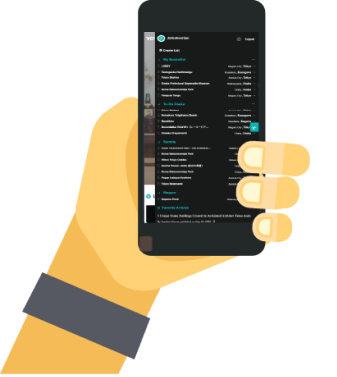
Most signs found throughout the ship are in both Japanese and English, and visitors can also download a free multilingual smartphone app for a more detailed, self-guided experience.
 Museum of Maritime Science
ESTABLISHMENT- 3-1 Higashiyashio, Shinagawa City, Tokyo 135-8587, Japan
- ★★★☆☆
- Tokyo International Cruise Terminal
ESTABLISHMENT - Japan, 〒135-0064 Tokyo, Koto City, Aomi, 2-chōme−8, 地先 東京国際クルーズターミナル
- ★★★★☆
How to Get to Soya
Soya is approximately 30–40 minutes from central Tokyo by train.
From Tokyo Station, take the Tokaido Line, Yamanote Line, or Joban Line to Shimbashi Station, then transfer to the fully automated Yurikamome Line (named after the black-headed gull, Tokyo’s official bird) and continue to Tokyo International Cruise Terminal Station. The ship is a seven-minute walk from the station.
From Shinjuku Station, take the Toei Oedo Line to Shiodome Station, where you can transfer to the Yurikamome Line for Odaiba.
If you’re coming from Shibuya, take the Ginza Line to Shimbashi Station, then transfer to the Yurikamome Line, continuing on to Tokyo International Cruise Terminal.




No Comments yet!