Anyone who’s read any travel articles about Japan recently could be forgiven for thinking the whole country’s been overwhelmed by travelers from overseas. Yes, over-tourism is an issue here, but for those willing to venture beyond the well-worn Golden Route of Tokyo, Osaka and Kyoto, there are a multitude of destinations boasting rich tapestries of culture and natural beauty that can be enjoyed without having to worry about throngs of people. The Tohoku region is a perfect example.

It’s often overlooked by international tourists despite its stunning natural landscapes, historical treasures, and rich culinary traditions. I recently had the opportunity to visit two cities in the region: Aomori and Morioka. From the Jomon period ruins in the former to the limitless bowls of soba in the latter, it was an unforgettable trip. What made it even more special was the journey up in the GranClass of the Shinkansen, the highest-quality way to travel in Japan.
GranClass: A Premium Shinkansen Experience
Buying a GranClass Shinkansen ticket online via the JR-East Train Reservation site is simple. After choosing your language, click on reservations, and then complete the four steps: purchase a ticket, proceed to selecting a train, enter train information, and finally select GranClass and complete your purchase. Tickets can also be bought at manned offices. However, as it’s a premium service with just 18 seats available, it’s recommended to book in advance.

After collecting my ticket at a designated ticket machine, I headed to the View Gold Lounge, close to the Yaesu Central Exit of Tokyo Station. Available exclusively for VIEW Card Gold Members and GranClass customers, it’s an elegantly designed space similar to what you’d find in an airport lounge. Entering the place, I was welcomed by the front-desk staff before being escorted to a table by an attendant, who then presented me with a menu of non-alcoholic drinks. I also received a cookie.
It was a pleasant way to start a day that was about to become even better. Arriving at the platform, I was again greeted by a cheerful attendant who showed me to my seat in the GranClass of the Hayabusa 7, Japan’s fastest bullet train. My first time riding in the premium cabin, it felt like the first-class section on a plane. Though more expensive than the cost of a regular Shinkansen ticket, it’s well worth it.
Reclining my leather chair 45 degrees felt so relaxing, and it’s a position known to help relieve pressure on the spine and neck. The back shell system also means you can put your seat back without disrupting passengers in the row behind. Before getting too comfortable, though, I put my chair forward to eat my light meal.
Travelers who purchase the Full Service ticket can choose between a Japanese-style and Western-style bento curated by a professional chef. Featuring seasonal ingredients that taste incredibly fresh, the meals come with an extensive choice of both alcoholic and non-alcoholic beverages. As I sipped on my wine while looking out at the scenic rural landscapes from the window, I knew I was embarking on a memorable journey.
Aomori: A Wealth of Natural and Cultural Attractions
A light meal was more than enough as the first destination on the trip was the Aomori Gyosai Center, a lively fish market with rows of vendors selling all kinds of seafood. For just 2,200 yen, visitors can purchase a set of 12 tickets to create their own donburi (steamed rice topped with various ingredients) using the seafood sold at the market. It’s a fun, interactive way to dine with some amazing options.
 Aomori Gyosai Center (Aomori Nokkedon)
ESTABLISHMENT FOOD POINT_OF_INTEREST- 1-chōme-11-16 Furukawa, Aomori, 030-0862, Japan
- ★★★★☆
From the market, it was then just a short bus ride to the Sannai Maruyama Site, one of the largest and most well-preserved historical places in Japan. Accidentally discovered before the planned construction of a baseball stadium, it’s an archeological wonderland that makes you feel like you’ve been transported back to ancient Japan. Showcasing reconstructed dwellings from a Jomon settlement 5,900 to 4,200 years ago, the highlights are the reconstructed pit dwellings and the stilt buildings. It’s a fascinating and insightful experience that should be on everybody’s Aomori itinerary.
- San'nai-Maruyama iseki Special Historical Site
ESTABLISHMENT POINT_OF_INTEREST TOURIST_ATTRACTION - Maruyama-305 Sannai, Aomori, 038-0031, Japan
- ★★★★☆
Another must for visitors in early August is the renowned Aomori Nebuta Festival. For those who can’t make it at that time of year, though, the next best thing is a visit to Nebuta Museum WA RASSE. Capturing the spirit of the iconic festival, it showcases four floats that participated in the previous iteration. These gigantic pieces of art look incredible, featuring characters that feel like they are about to move. The attention-to-detail that has gone to making them truly is a sight to behold.
- Nebuta Museum WA RASSE
ESTABLISHMENT MUSEUM POINT_OF_INTEREST - Japan, 〒030-0803 Aomori, Yasukata, 1-chōme−1−1 1F
- ★★★★☆
Combine Wellness and Lodging at ReLabo Medical Spa & Stay
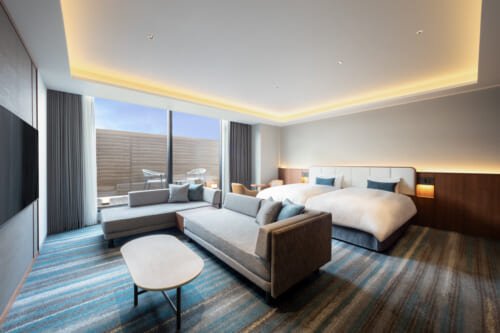
Across from the Nebuta Museum is the lively, duty-free shopping center A-FACTORY, where I enjoyed the best apple pie I’ve ever eaten at the award-winning shop, Skip Egg. It was a satisfying way to round off the day before another short walk to ReLabo Medical Spa & Stay, my hotel for the night. Conveniently connected to Aomori Station, it’s a luxury accommodation combining a wellness experience and lodging with rooms that are spacious, exquisitely designed and supremely comfortable.
The same can be said of the rooms on the sixth floor, where guests can enjoy a soothing soak in a hot spring bath, do some fitness activities in the gym, try yoga, relax in the lounge, or just lie back and forget all their worries with an ayurvedic spa. Another option is an exhaustion recovery injection. There are several to choose from, including some garlic varieties — named for their smell, not the ingredients — that are applied to combat fatigue.
Though tempting, I just opted for the hot spring bath before going down for a very healthy dinner at the hotel’s restaurant. More than just a meal, it’s like a culinary journey that provides you with a greater understanding of Aomori’s food culture. The head chef works with medical professionals to create dishes that are not only appetizing but also nutritious, including a gorgeously presented vegetable plate.
Breakfast the following morning was just as impressive. However, before digging into the extensive buffet, I was booked in for a yoga session. Taking place in a Zen-inspired space, it was a wonderful way to start the day, helping to refresh my mind and body. The aim is to transition from the parasympathetic nervous system dominant state of the evening to the sympathetic nervous system dominant state that helps you prepare for the day’s activities ahead.
- ReLabo Medical Spa & Stay
ESTABLISHMENT LODGING POINT_OF_INTEREST - Japan, 〒038-0012 Aomori, Yanakawa, 1-chōme−1−5 青森駅東口ビル 内
- ★★★★☆
Morioka: Sumptuous Soba and a Serene Garden
Feeling energized, I traveled to Morioka, a city known for its variety of noodles. Before sampling some sumptuous soba, though, there was an opportunity to witness what is known as the “Shinkansen Kiss,” when the coupling and decoupling of two bullet trains — specifically the green E5 series Hayabusa and the bright red E6 series Komachi — occurs. One of only three stations in Japan where this can be observed, it is quite the sight.
Another memorable sight in Morioka is of hundreds of empty bowls lined up at Azumaya Honten, an entertaining and interactive restaurant that was established in 1907. There are various options on the menu, but the real appeal of this place is the all-you-can-eat soba. The challenge is to go through as many bowls as you can as your server keeps the food coming. It’s said that around 15 of the one-mouth-full servings are equivalent to one full bowl. Those who manage to finish 100 receive a special wanko soba wooden plaque.
- AZUMAYA Honten
ESTABLISHMENT FOOD POINT_OF_INTEREST - 1-chōme-8-3 Nakanohashidōri, Morioka, Iwate 020-0871, Japan
- ★★★★☆
Unfortunately, I stopped at 82. Though I could have probably gone on as I still had room left for some amazing rice crackers at Shirasawa Senbei, a hugely popular store in the city that was founded more than 80 years ago. That was then followed by a mochi snack and green tea at Nanshoso, a protected residence that was built by the Morioka-born businessman, Yasugoro Segawa, in 1885. It is now a registered national monument.
- Nanshoso
ESTABLISHMENT POINT_OF_INTEREST TOURIST_ATTRACTION - Japan, 〒020-0875 Iwate, Morioka, Shimizuchō, 13−46 南昌荘
- ★★★★☆
Life can move at a relentless pace, but we all have occasions when time seems to stand still. Gazing out at Nanshoso’s garden felt like one of those occasions. It was the perfect time to visit as the colorful autumn leaves looked so vibrant, and were even reflected on the property’s polished floorboards. Built in a chisenkaiyushiki style, featuring a large pond with a path built around it, the garden is so peaceful and well-designed. It was the perfect spot to end the tour.
All Photos by Todd Fong.
Sponsored by JR EAST.



No Comments yet!